Receding Gums: Can Toothpaste Actually Help?
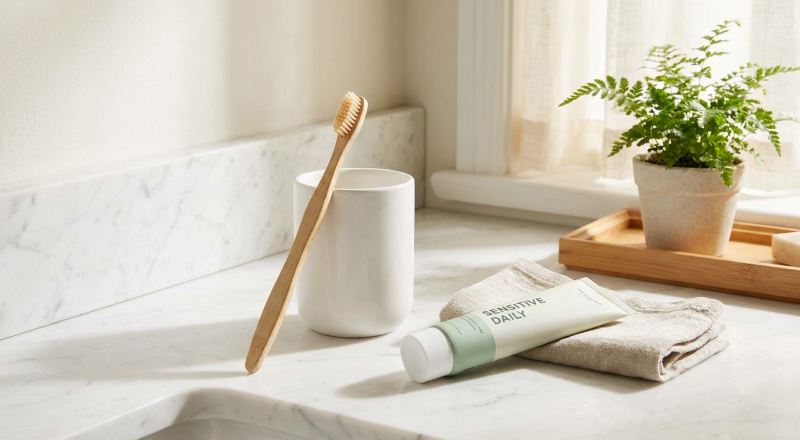
Toothpaste cannot regrow gum tissue that has already receded. Gum tissue does not grow back on its own, and no toothpaste reverses that. What the right toothpaste can do is ease the sensitivity receding gums cause and help slow further recession by supporting gentler brushing.
Think of toothpaste as symptom control and prevention, not a cure. Persistent recession needs a dentist.
What toothpaste can realistically do
Receding gums expose the root surface, which has no enamel and reacts to cold and sweet. A desensitizing toothpaste can calm that nerve response over a few weeks of consistent use.
Ingredients studied for sensitivity include potassium nitrate, which quiets the nerve signal, and stannous fluoride or hydroxyapatite, which help occlude the exposed tubules. If sensitivity is your main complaint, our overview of what causes tooth sensitivity explains the mechanism.
What it cannot do
No toothpaste rebuilds lost gum. Marketing that implies regrowth is overstating the evidence.
Recession is also a warning sign. It can come from aggressive brushing, gum disease, grinding, or bite issues, and those causes need addressing directly. A toothpaste that only masks sensitivity can hide progression, so pair it with a dental checkup.
Brushing habits that protect the gumline
Switch to a soft-bristled brush and use light pressure, since hard scrubbing is a leading cause of mechanical recession. Angle the bristles gently toward the gumline rather than sawing across it.
Choose a low-abrasion paste to avoid wearing the exposed root further. Our guide to toothpaste for sensitive teeth and gums covers what to look for, and if you want ranked options see our best toothpaste for sensitive teeth picks.
If gums keep receding or bleed regularly, see a dentist to rule out periodontal disease.