Best Dog Toothpaste: 6 Picks That Actually Work
Byline: Enamelly Editorial Team | Last reviewed: June 2026. VOHC product list checked June 2026. Amazon listings verified June 2026.
Disclosure: Enamelly earns a commission on purchases made through links on this page at no extra cost to you. Our picks are based on formulation analysis, veterinary acceptance criteria, and aggregated owner reviews, not first-hand testing.
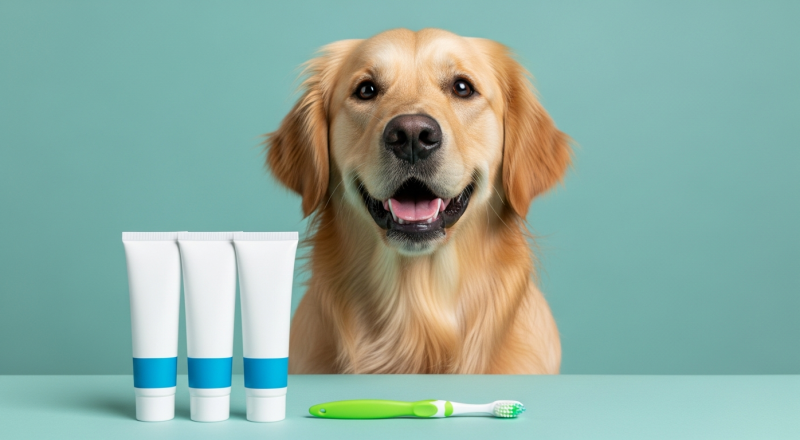
The best dog toothpaste is Virbac C.E.T. Enzymatic Toothpaste. It carries Veterinary Oral Health Council (VOHC) acceptance, uses a dual-enzyme system that continues working after the brush leaves the mouth, and comes in four flavors dogs tolerate well enough that daily brushing stops being a battle. That is the short answer.
The longer answer depends on your situation. According to the American Veterinary Medical Association, an estimated 80 percent of dogs show signs of periodontal disease by age three. Toothpaste alone cannot reverse disease that has already progressed, but consistent at-home brushing is the single most effective tool for preventing it from starting. The AVMA and the American Animal Hospital Association both cite daily brushing as the gold standard; everything else in the oral health product category (chews, water additives, dental diets) is supplemental.
Before any product: never use human toothpaste on a dog. Standard toothpastes contain xylitol, which is acutely toxic to dogs even in small amounts and can trigger rapid hypoglycemia and acute liver failure, and fluoride, which is unsafe when swallowed. Neither hazard requires a large dose. If your dog ingests human toothpaste, contact your veterinarian or the ASPCA Animal Poison Control Center (888-426-4435) immediately. Every product on this list is pet-formulated and swallow-safe.
The six picks below cover daily maintenance, picky dogs, starter kits, bad breath, flavor refusers, and brush-averse dogs. Pricing and availability vary; check each product page for current information. For a broader look at keeping your dog’s mouth healthy year-round, our pet dental care hub covers everything from water additives to dental chews.
Quick Pick: Best Dog Toothpaste at a Glance
If you are comparing options side by side, this table captures the key differentiators. VOHC Accepted means the Veterinary Oral Health Council has evaluated the product’s plaque or tartar control claims against clinical data.
| Product | Type | Flavor(s) | VOHC Accepted | Best For |
|---|---|---|---|---|
| Virbac C.E.T. Enzymatic Toothpaste | Enzymatic | Poultry, Vanilla-Mint, Beef, Malt | Yes | Overall best / daily maintenance |
| Petsmile Professional Dog Toothpaste | Non-enzymatic (CALPROX) | London Broil, Rotisserie Chicken | Yes | Picky dogs / professional-grade whitening |
| Vet’s Best Enzymatic Dog Toothbrush and Toothpaste Kit | Enzymatic | Vanilla-Mint | No | Beginners / budget kit |
| Arm & Hammer Advanced Care Toothpaste for Dogs | Enzymatic + Baking Soda | Fresh Mint, Banana, Tartar Control | No | Bad breath focus |
| Nylabone Advanced Oral Care Dog Toothpaste | Non-enzymatic | Peanut Butter | No | Dogs who reject poultry/meat flavors |
| TropiClean Fresh Breath Brushing Gel | Gel (no-brush option) | Clean Mint | No | Dogs who resist brushing / breath support |
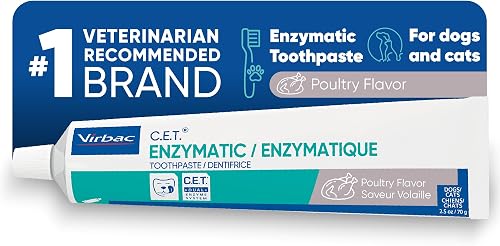
1. Virbac C.E.T. Enzymatic Toothpaste: Best Overall
Best for: dogs of all ages who tolerate brushing; owners who want a clinically validated daily product.
Virbac C.E.T. Enzymatic Toothpaste combines glucose oxidase and lactoperoxidase, two enzymes that generate hypothiocyanite in the presence of saliva. Hypothiocyanite is an antimicrobial compound that inhibits the bacteria responsible for plaque formation, so the paste keeps working after the brush comes out of the mouth. This is the core difference between enzymatic and non-enzymatic pastes: a standard paste cleans mechanically during brushing; an enzymatic paste adds a biochemical action that continues post-brush. The VOHC seal on C.E.T. covers plaque reduction specifically, meaning the council reviewed actual clinical study data and confirmed the claim holds up. That level of scrutiny is rare in the pet dental space, where most marketing leans on ingredient lists rather than demonstrated outcomes.
Four flavors are available. Poultry is the most widely accepted because most dogs respond to it immediately; vanilla-mint works for owners who want a fresher smell without the meat scent. The tubes come in 70g sizes, sufficient for a medium or large dog at daily brushing for roughly six to eight weeks. One limitation: C.E.T. paste does not contain baking soda or any abrasive whitening agent, so it will not reverse existing tartar. If your dog already has heavy brown buildup, that requires a professional cleaning first. For prevention and maintenance, C.E.T. is the benchmark everything else gets measured against. For more cat and dog dental care product comparisons, see our full category guide.
- Dual-enzyme system with documented post-brush antimicrobial activity
- VOHC accepted for plaque reduction
- Four flavor options including poultry and beef
- Veterinary-grade formula widely recommended in clinical settings
Drawbacks: No abrasive action for existing tartar. Poultry flavor is a hard no for some dogs despite the name.
2. Petsmile Professional Dog Toothpaste: Best for Picky Dogs
Best for: dogs with documented flavor aversions to meat-based pastes; owners willing to pay a premium for a VOHC-accepted product with a different mechanism.
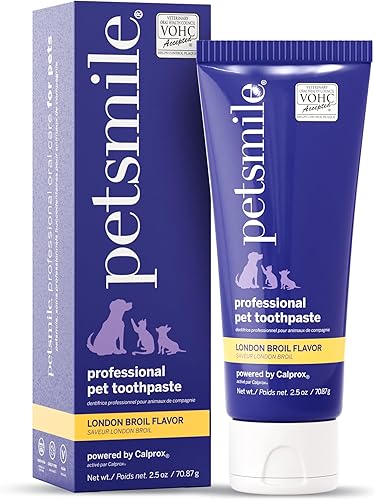
Petsmile Professional Dog Toothpaste takes a different approach from C.E.T. Its active technology is CALPROX, a patented compound the brand describes as working by dissolving the protein pellicle that bacteria attach to on tooth surfaces. The result is a clean surface that resists bacterial adhesion rather than killing the bacteria directly. The VOHC has accepted Petsmile for plaque control, making it one of a small number of non-enzymatic pastes with that credential.
The flavors are genuinely different from the competition. London Broil and Rotisserie Chicken are concentrated savory meat flavors, not the mild “poultry” scent you find in most enzymatic pastes. That specificity is what works for dogs who turn away from generic meat flavor but respond well to a strong roasted-meat profile. Dog owners who have tried every other paste before landing on Petsmile report this pattern with notable consistency across forum threads. Petsmile costs more per ounce than most competitors on this list. The trade-off is a paste that is both VOHC-validated and genuinely palatable to dogs who have otherwise refused every product in this category.
- VOHC accepted for plaque control using CALPROX technology
- Strong savory flavors that work for enzyme-paste refusers
- No brushing required per the brand’s finger application method (though a brush improves mechanical cleaning)
Drawbacks: Higher price point. The CALPROX mechanism has less published independent research than the enzymatic approach.
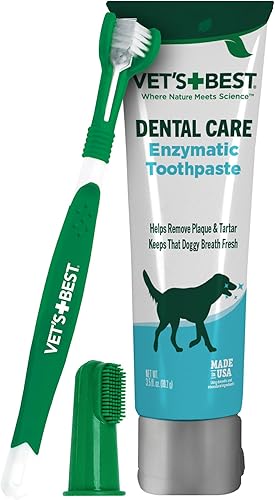
3. Vet’s Best Enzymatic Dog Toothbrush and Toothpaste Kit: Best Starter Kit
Best for: first-time dog owners beginning a brushing routine; households that need brush and paste in one purchase.
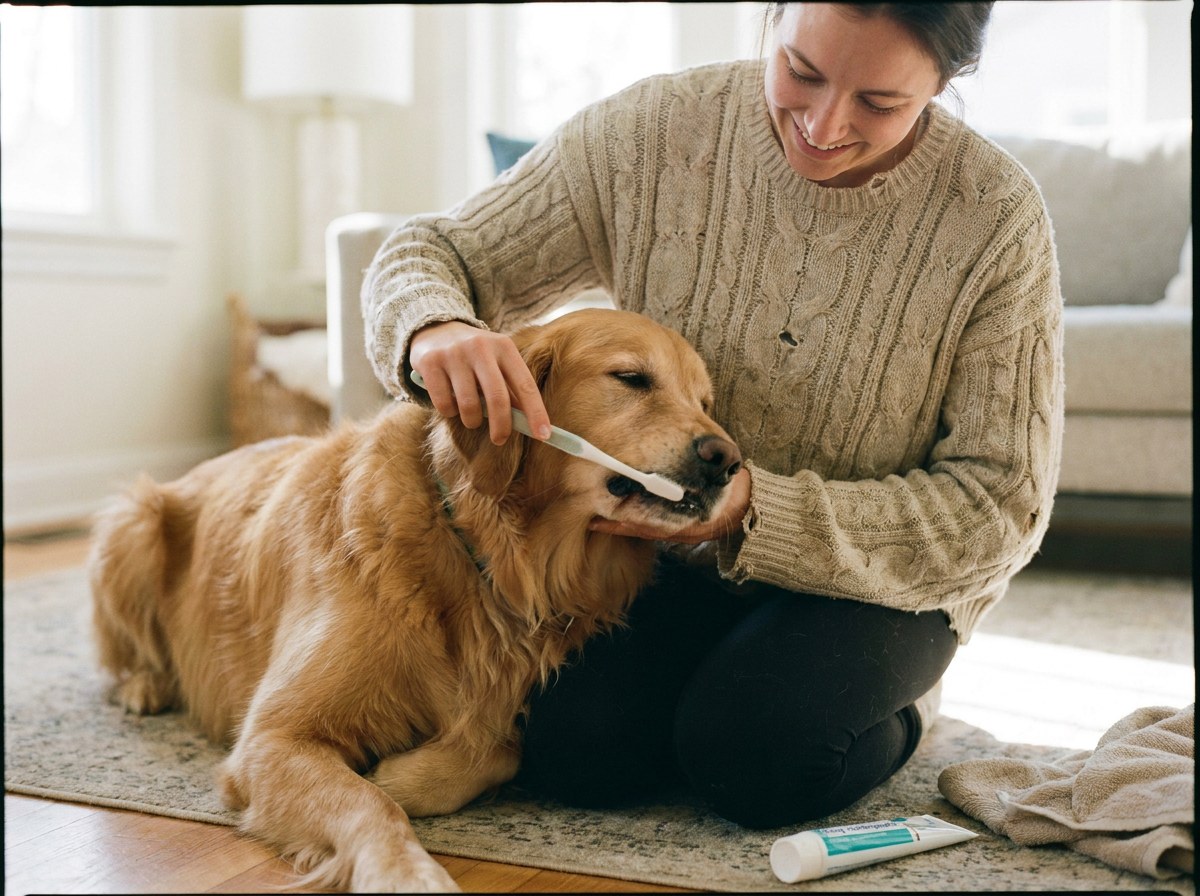
The Vet’s Best Enzymatic Dog Toothbrush and Toothpaste Kit bundles a triple-headed toothbrush and finger brush with its enzymatic toothpaste in a single box. The toothpaste uses glucose oxidase and aloe vera; the enzymatic action is functional, though the formula has not sought VOHC acceptance. The vanilla-mint flavor is mild enough that most dogs accept it without extended desensitization. The triple-headed brush is the practical reason to start here. It cleans three sides of each tooth simultaneously, which reduces brushing time considerably on larger breeds. For a dog being introduced to brushing for the first time, shorter sessions with a less disruptive tool matter more than marginal differences in paste potency.
The kit format makes a sensible choice for a new dog owner. Everything needed to start a routine is in the box, and the price sits below what you would pay for a VOHC paste alone. Once your dog is comfortable with daily brushing, upgrading to Virbac C.E.T. paste while keeping the triple-headed brush is a natural next step.
- Complete kit at a budget price point
- Triple-headed brush design speeds up sessions
- Enzymatic formula with aloe vera
- Mild vanilla-mint flavor with broad palatability
Drawbacks: Not VOHC accepted. Enzymatic concentration is not published on the label, so clinical potency is uncertain compared to Virbac.
4. Arm & Hammer Advanced Care Toothpaste for Dogs: Best for Bad Breath
Best for: dogs with persistent bad breath where plaque bacteria is the likely cause; owners who want a widely available, affordable enzymatic option.
Arm & Hammer Advanced Care Toothpaste for Dogs combines an enzymatic base with baking soda, the same ingredient behind the brand’s human dental products. Baking soda is a mild abrasive and pH neutralizer. In a dog’s mouth, where salivary pH tends to run more alkaline than in humans, baking soda’s primary contribution is odor neutralization rather than abrasion. The practical result is noticeably fresher breath after brushing, which makes a meaningful difference if you share a couch with a dog whose mouth currently smells like a fishmonger’s at noon. The Fresh Mint variety has a strong mint scent that some owners prefer for that reason, though a meaningful percentage of dogs dislike mint strongly. Banana and Tartar Control flavors offer alternatives.
This is the easiest product to find in physical stores, which matters if you run out mid-week and cannot wait for delivery. That availability, combined with a low price per tube, makes it a reasonable main paste for dogs whose primary issue is breath rather than active plaque disease.
- Baking soda plus enzymatic combination tackles odor at the source
- Multiple flavor variants including non-mint options
- Widely available in physical retail stores
- Low cost per tube
Drawbacks: Not VOHC accepted. Some dogs dislike mint flavor strongly. Baking soda adds limited clinical value for plaque versus enzymatic action alone.
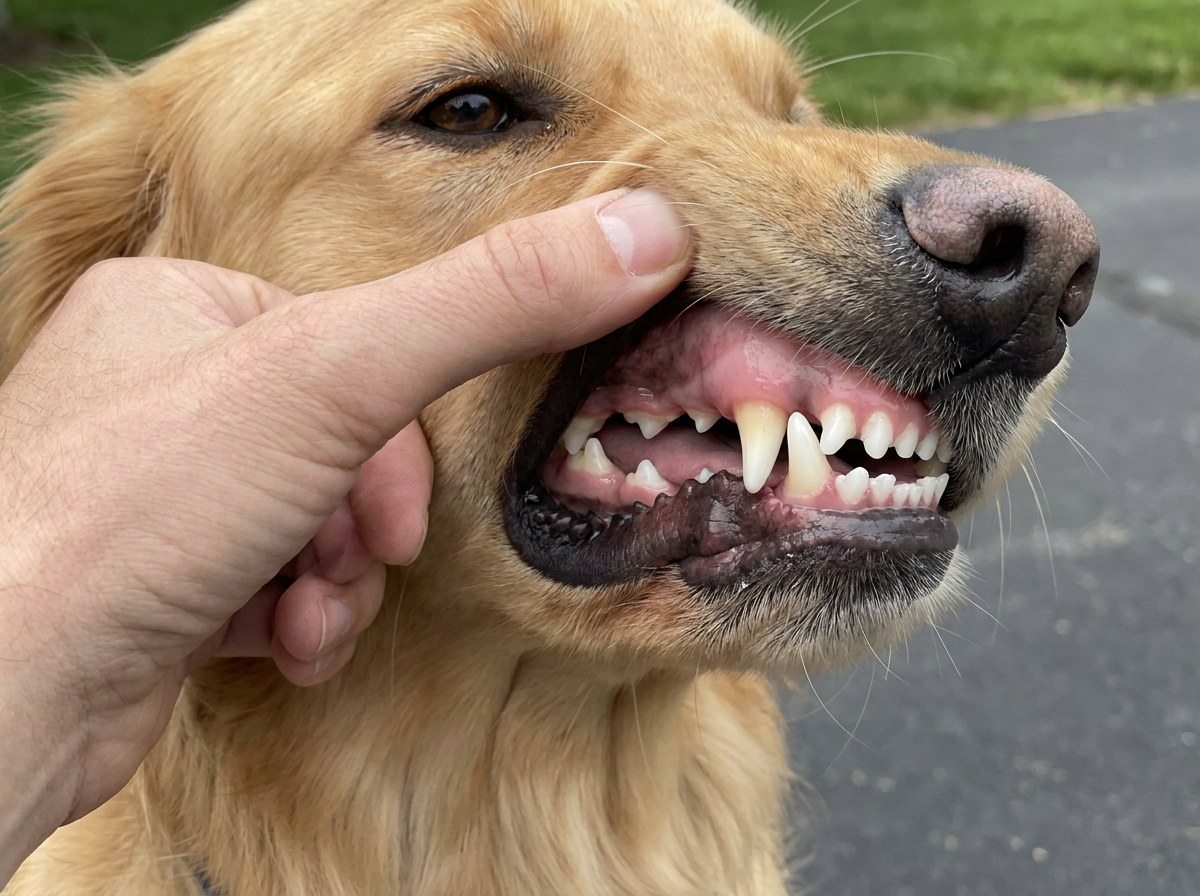
5. Nylabone Advanced Oral Care Dog Toothpaste: Best Peanut Butter Option
Best for: dogs who refuse every meat or mint flavor; peanut butter-motivated dogs who need a palatability win to get brushing started.
Peanut butter flavor sounds like a gimmick until you have a dog who rejects poultry, beef, vanilla, and mint in sequence. Nylabone Advanced Oral Care Dog Toothpaste is not enzymatic, relying instead on dentifrice abrasives and a zinc compound for mechanical plaque removal and mild antimicrobial action. The clinical ceiling is lower than the enzymatic options above, but a paste used consistently beats a superior paste used never. The peanut butter flavor in this formula is strong enough that dogs typically accept a brush without the extended conditioning process that can delay the start of a routine by weeks. If you have been through three other pastes and still cannot get the brush past your dog’s front teeth, this is a reasonable next step.
Note: this formula does not contain xylitol, but if you are buying any peanut butter product for your dog, confirming xylitol-free status is worth the ten seconds it takes to read the label. Xylitol appears in some peanut butter products marketed to humans and has caused fatal toxicity in dogs. The ASPCA Animal Poison Control Center (888-426-4435) is available 24 hours a day if you suspect ingestion.
- Peanut butter flavor for dogs who reject all other options
- Zinc-based antimicrobial compound
- Xylitol-free (always verify on current label)
- Pairs well with Nylabone brushes for a cohesive routine
Drawbacks: Not enzymatic. Not VOHC accepted. Mechanical cleaning only; no post-brush biochemical action.
6. TropiClean Fresh Breath Brushing Gel: Best for Brush-Resistant Dogs
Best for: dogs who actively resist a toothbrush; owners seeking a brushing-optional format for interim breath support.
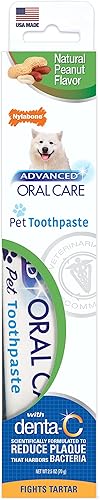
TropiClean Fresh Breath Brushing Gel is designed to be applied directly to teeth and gums without a brush, using a finger or a gauze pad. The active ingredients include green tea extract and sodium hexametaphosphate, a tartar-control compound used in human dental products. The mint flavor is clean and not overpowering, which keeps acceptance rates high. Mechanical brushing removes plaque biofilm in a way no gel or paste can replicate without a brush. TropiClean’s gel reduces the severity of a missed brushing session; it does not replace brushing for dogs who could tolerate it. Use it as a bridge while you work on brush desensitization, not as a permanent substitute.
For dogs with a strong brush aversion where you have genuinely tried conditioning over weeks, a consistently applied gel is better than no oral hygiene at all. The gel format also works as a supplement on days when full brushing is not practical. You can find more product comparisons in our comparisons section.
- Brush-optional application via finger or gauze
- Green tea extract with documented antimicrobial properties
- Sodium hexametaphosphate for tartar control
- Mint flavor that most dogs tolerate well
Drawbacks: Not VOHC accepted. Cannot replace mechanical brushing for plaque biofilm removal. Brush-free application limits physical scrubbing action.

How We Picked These Products
Our selection criteria are formulation-based, not marketing-based. The process started from the VOHC accepted product list for dogs. As of June 2026, two toothpastes carry VOHC acceptance for dogs in the United States: Virbac C.E.T. and Petsmile Professional. Both made this list. The remaining four were selected to fill specific gaps those two products do not cover: a starter kit, a bad-breath formula, a peanut butter option for complete flavor refusers, and a brush-free format. No product was added simply to reach a round number.
VOHC Acceptance: To earn the VOHC seal, a manufacturer must submit data from a clinical trial conducted under VOHC protocol, typically a 28-day study measuring plaque or tartar scores against a control group at a pre-specified reduction threshold. The council does not test products itself; it reviews submitted data and awards the seal when the statistical threshold is met. Products with VOHC acceptance receive stronger consideration in this list. Absence of the seal does not disqualify a product if it fills a niche the VOHC products do not cover, but we note it explicitly for every pick.
Active Ingredient Quality: Enzymatic pastes using glucose oxidase and lactoperoxidase have the most published veterinary research behind them. The mechanism, production of hypothiocyanite through a salivary reaction, is well-documented in peer-reviewed dental literature. We prioritize this class of formula over non-enzymatic abrasive pastes, with the exception of CALPROX (Petsmile), which has independent VOHC validation through a different mechanism. Products with unlisted or ambiguous active ingredients were excluded from consideration.
Flavor Palatability and Compliance: A paste your dog refuses is not a paste. Reviewing aggregated owner feedback patterns across retail platforms, one pattern was consistent: the most common reason owners abandon brushing routines is flavor rejection, not brush aversion. Products representing distinct flavor profiles (poultry, beef, peanut butter, mint) were given preference over multiple entries in the same flavor category. We did not use star ratings as a primary signal, focusing instead on patterns in written reviews mentioning compliance, refusal, and routine durability.
Safety: Every product on this list is xylitol-free and fluoride-free, verified against published ingredient lists. Products with unlabeled flavoring agents that could not be confirmed as pet-safe were excluded.
What to Look for in a Dog Toothpaste
The pet dental product market is large and mostly unregulated at the efficacy level. A tube can carry terms like “advanced,” “professional,” or “veterinary formula” with no obligation to prove those claims. Two things cut through the marketing: VOHC acceptance and published active ingredients. Everything else is packaging.
Enzymatic vs. Non-Enzymatic
Enzymatic pastes using the glucose oxidase and lactoperoxidase system have a post-brush advantage: when saliva activates the enzyme system, it generates hypothiocyanite, an antimicrobial compound that continues inhibiting plaque-forming bacteria after the brush is put away. Non-enzymatic pastes rely entirely on abrasives and any antimicrobial compounds in the formula, all of which stop working the moment brushing ends. Published veterinary dental studies, including a frequently cited trial in the Journal of Veterinary Dentistry, show the lactoperoxidase-glucose oxidase system reduces plaque scores significantly compared to non-enzymatic controls over 28-day periods.
Here is the part most roundups skip: that enzymatic advantage only holds if your dog lets you brush for more than a few seconds. A consistent 30-second session with a non-enzymatic paste beats a sporadic two-minute session with the best enzymatic formula on the market. That is why this list includes both categories. For dogs who tolerate brushing, enzymatic wins. For everyone else, compliance beats chemistry.
VOHC Acceptance
The VOHC is the closest veterinary analogue to the American Dental Association seal on human toothpastes. Products accepted by the VOHC for dogs have undergone trials demonstrating a statistically significant reduction in plaque or tartar versus a control group. Check the current VOHC product list at vohc.org before purchase, as acceptance status can change if brands reformulate without resubmitting data.
Flavors and Compliance
Dogs do not spit. The paste gets swallowed, which is why pet-formulated pastes use flavors designed for palatability rather than mint-freshness. Poultry and beef flavors work for most dogs; peanut butter reaches the refusers. Pick a flavor your dog will cooperate with over one that sounds better to you. Daily use of a mediocre paste is worth more than weekly use of the best one.
What to Absolutely Avoid
Human toothpaste is dangerous for dogs. Xylitol, a sweetener in most mainstream toothpastes and some specialty dental products, causes a rapid drop in blood glucose in dogs and acute liver failure in severe cases. Fluoride is toxic when swallowed in the amounts present in human toothpastes. Neither hazard requires a large dose to cause serious harm. If your dog accidentally ingests human toothpaste, contact your veterinarian or the ASPCA Animal Poison Control Center (888-426-4435) immediately.
When to See a Vet Instead of Buying a New Paste
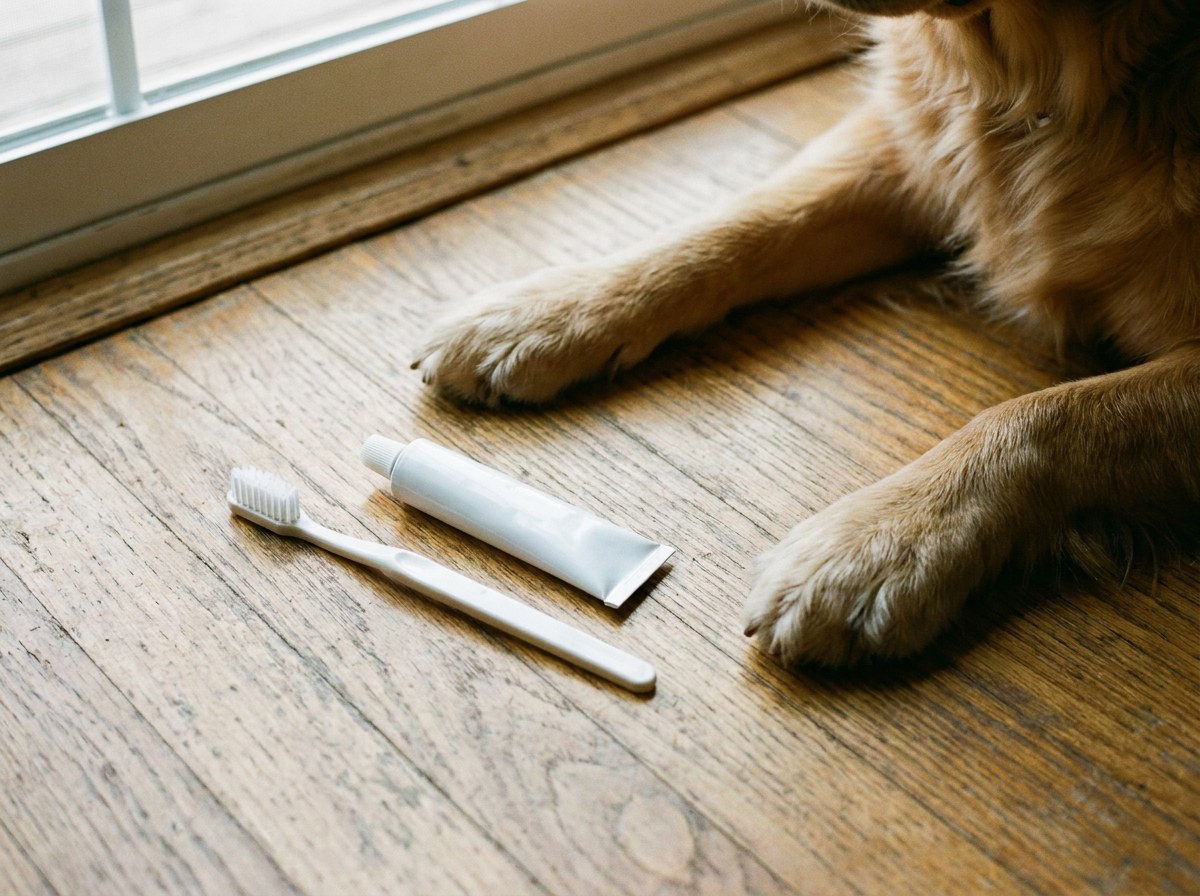
Toothpaste prevents dental disease at home. It does not treat disease that has already developed. Periodontal disease in dogs progresses below the gumline, where no brush can reach, and requires professional cleaning under anesthesia to address properly. No at-home product replaces that once the disease has started.
Take your dog to a veterinarian if you notice any of the following:
- Persistent bad breath that does not improve after a week of consistent brushing
- Visible brown or yellow calculus (tartar) deposits at or below the gumline
- Red, swollen, or bleeding gums on contact with the brush
- Loose teeth or reluctance to chew hard food or toys
- Pawing at the mouth or face rubbing on surfaces
- Discharge, swelling, or a visible growth along the gumline or jaw
The American Animal Hospital Association recommends annual professional dental examinations for most adult dogs, and twice yearly for small breeds, which are statistically more prone to severe periodontal disease due to tooth crowding. Starting a brushing routine does not eliminate the need for professional checkups; it reduces how frequently those cleanings need to be performed. The AAHA 2019 Dental Care Guidelines note that daily brushing is the single most effective at-home intervention for periodontal disease prevention; dogs with consistent daily brushing histories typically go longer between professional cleanings than those with no routine, though individual results depend on breed, diet, and systemic health.
Frequently Asked Questions
How often should I brush my dog’s teeth?
Daily brushing is the veterinary recommendation. The plaque cycle in dogs is similar to humans: soft plaque forms within 24 hours and begins mineralizing into tartar within 72 hours. Brushing every two to three days can slow the process but does not prevent tartar formation the way daily brushing does. If daily is not realistic for your household, aim for at least four times per week.
Is human toothpaste safe for dogs in an emergency?
No. Human toothpaste contains xylitol and fluoride, both of which are toxic to dogs when ingested. There is no safe dose of xylitol for a dog; even a small amount can cause hypoglycemia and liver damage. In a pinch, water on a soft brush provides some mechanical cleaning. Use a pet-formulated paste as soon as possible.
What does VOHC acceptance actually mean?
The Veterinary Oral Health Council is an independent body that reviews clinical trial data submitted by manufacturers. A product earns VOHC acceptance when the data shows statistically significant plaque or tartar reduction compared to a control group. It is not a government certification, but it is the most rigorous third-party standard in pet dental care and carries real weight when choosing between products.
My dog refuses every toothpaste I try. What should I do?
Start with flavor, not technique. Work through poultry, beef, peanut butter, and vanilla flavors before concluding your dog will not accept brushing. If your dog rejects the brush itself rather than the paste, begin desensitization by touching the lips and gums with a finger for two weeks before introducing any tool. Petsmile’s finger-application method and TropiClean’s gel format are designed for exactly this situation.
Can I use dog toothpaste on cats?
Check the label before assuming cross-use is safe. Some flavoring compounds and additives tolerated by dogs may not be appropriate for cats. Products specifically formulated for dogs should be used only on dogs unless the manufacturer explicitly states dual-species approval. Our cat and dog dental care guide covers species-specific options in detail.
How long does a tube of dog toothpaste last?
A 70g tube (the standard size for Virbac C.E.T. and most other brands) lasts roughly six to eight weeks for a medium-sized dog brushed daily with a pea-sized amount per session. Small dogs use less per session; large dogs need a bit more. Buying in two-packs reduces per-tube cost and ensures you do not run out mid-routine.