Charcoal Toothpaste: Is It Safe for Your Enamel?
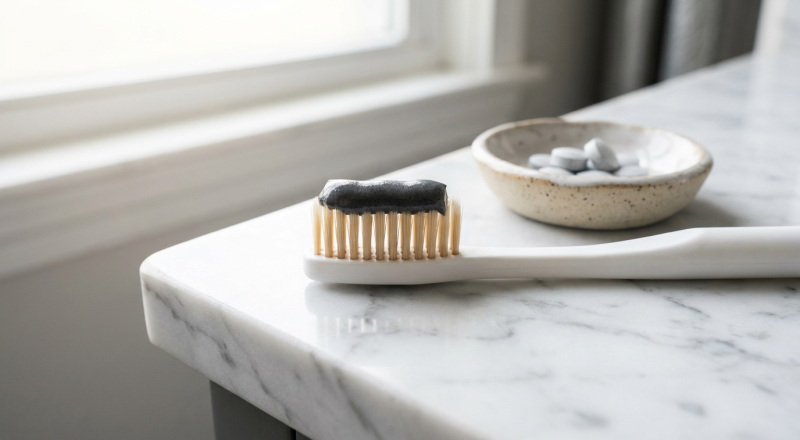
Charcoal toothpaste is not automatically unsafe, but abrasive formulas are, and you cannot tell which is which from the front of the tube. Enamel that gets worn away does not grow back.
The brightening most people see in the first week is surface stain removal, not a change in the underlying colour of the tooth.
What charcoal does while you brush
Activated charcoal is a porous carbon powder. In toothpaste it works mainly as a physical abrasive, scrubbing extrinsic stains left by coffee, tea, red wine and tobacco.
Marketing usually leans on adsorption, the idea that charcoal binds toxins. Reviews in the dental literature have repeatedly described that claim as unsubstantiated for the two minutes a paste spends on your teeth.
The abrasivity problem
Dentistry measures scrubbing force with RDA, relative dentin abrasivity. Values up to 250 are treated as acceptable for daily products, and ordinary pastes sit well below that.
The issue is disclosure. Published reviews of charcoal toothpastes have flagged that most brands do not publish an RDA figure at all, so you are buying an unknown.
Combine an unknown abrasive with a hard-bristled brush and heavy pressure and you get gradual enamel and dentin wear. That process is slow, painless and permanent.
What these formulas usually leave out
Most charcoal pastes skip fluoride, and many skip hydroxyapatite too. That removes the remineralizing half of brushing and leaves only the scrubbing half.
If the reason you avoid fluoride is personal preference rather than dentist instruction, the hydroxyapatite toothpaste guide covers the main alternative that still supports enamel.
Who should skip charcoal entirely
Anyone with receding gums or exposed root surfaces. Dentin is considerably softer than enamel and wears far faster.
Anyone with veneers, crowns or composite bonding, where abrasion dulls the polish and dark particles can settle along the margins.
Anyone already dealing with sensitivity. If cold or sweet triggers a reaction, adding an abrasive is the wrong direction. Ask your dentist before you keep using it.
Gentler ways to the same result
Most stain complaints are extrinsic and respond to a low-abrasion paste plus a hygienist visit. The evidence on whether daily whitening formulas cost you anything is in does whitening toothpaste damage enamel.
For deeper discolouration, surface scrubbing will not reach it, and the options in how to whiten teeth without peroxide are a more realistic starting point.