How Often Should You Brush Your Dog’s Teeth?
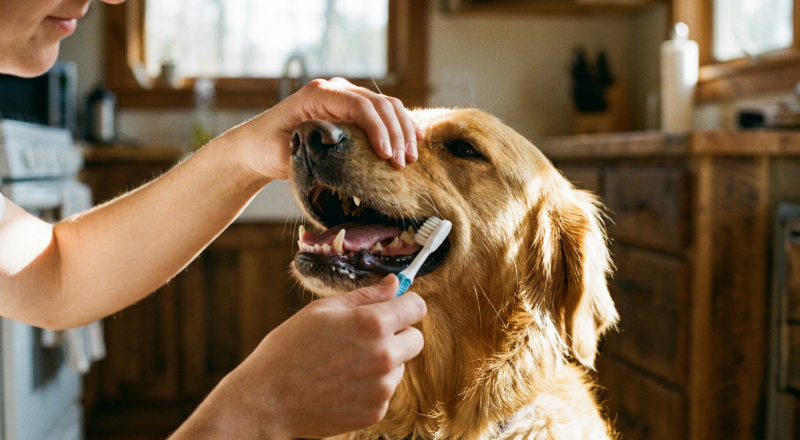
Brush your dog’s teeth once a day. Daily brushing is the cadence veterinary dental guidance points to, including the home care position of the American Veterinary Dental College, and it is the only frequency that stays ahead of plaque.
If daily is not realistic in your house, three times a week is the working floor. Go below that and you are brushing teeth that have already started hardening between sessions.
Frequency beats session length
Plaque stays soft for roughly the first day or two, then it mineralizes into tartar that no toothbrush removes. At that point only a veterinary cleaning under anesthesia takes it off.
A rushed 30-second pass every evening protects your dog better than a careful five-minute scrub once a week. If your dog fights the brush, the order of steps in our guide on how to brush a dog’s teeth matters far more than the calendar.
How often by age and risk
- Puppies: daily, in 20-second sessions, while they still accept new handling.
- Healthy adult dogs: daily, three times weekly at absolute minimum.
- Small and flat-faced breeds: daily, no flexibility. Crowded teeth trap plaque faster, and periodontal disease shows up earlier in toy breeds.
- Dogs with gingivitis, or fresh from a dental cleaning: daily, and ask your vet whether they want a specific product used alongside it.
What actually counts as a brushing
You are cleaning the outer surfaces of the canines and the back molars where tartar builds first. The tongue handles most of the inner surfaces, so skip them rather than turning the session into a wrestling match.
Use a paste made for animals. Enzymatic and non-enzymatic options both work differently, and our roundup of the best dog toothpaste breaks down which flavour and mechanism suits a reluctant dog.
Never reach for your own tube. The reasons human toothpaste is unsafe for pets come down to xylitol, fluoride load and detergents your dog cannot spit out.
Making daily stick
Anchor it to something you already do every night. After the evening meal, before the last walk, same spot on the floor.
Dogs settle into predictable routines quickly. The households that keep brushing going are rarely the disciplined ones, they are the ones that attached it to an existing habit.
Chews, water additives and dental diets reduce plaque, but they sit alongside brushing rather than replacing it. If your dog has visible brown tartar, bad breath or red gum margins already, book a veterinary exam before adjusting your home routine.