Tartar Removal for Dogs: What Works at Home vs at the Vet
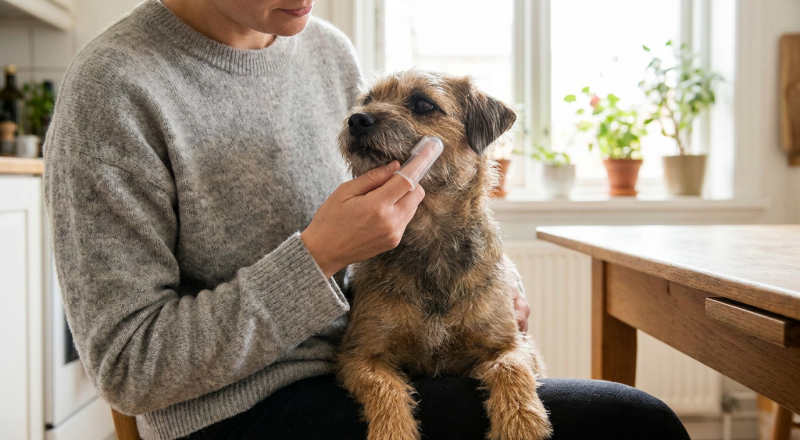
Once plaque mineralizes into tartar, no home method removes it safely. Removal is a professional scaling job under anesthesia; everything you do at home is prevention, and the earlier you start, the less scaling your dog will need.
What actually works at home
Daily brushing with a dog toothpaste is the intervention with the strongest support in veterinary dentistry. Frequency matters more than perfect technique; how often to brush a dog’s teeth covers realistic cadences, and even three sessions a week slows new tartar compared with none. Start with a brushing routine the dog tolerates, because a fight every night ends the habit within a month.
Chews carry a real seal
The Veterinary Oral Health Council (VOHC) awards its seal to products that met plaque or tartar reduction standards in controlled trials, and that seal is the only shortcut worth trusting on packaging. Not every chew earns it; chews versus toothpaste breaks down what each can reach. Chews help the back teeth dogs chew with and do little for incisors.
Why the vet uses anesthesia
Dental cleaning means scaling above and below the gumline, and the below-the-gum part is where disease lives. An awake dog cannot tolerate that, which is why anesthesia-free cleanings only polish the visible crown and leave the real problem intact. Vets also radiograph roots, which finds painful teeth that never show at the gumline.
Where home care fails
The named failure case is established disease. Brown calculus on molars, red gums, or a mouth that flinches when touched is past brushing; no product reverses it, and delaying the cleaning while buying chews lets periodontal disease progress quietly. Senior dogs add a wrinkle: age means more screening before anesthesia, not an automatic no.