Manual vs Electric Toothbrush: Which Wins for Enamel Care?
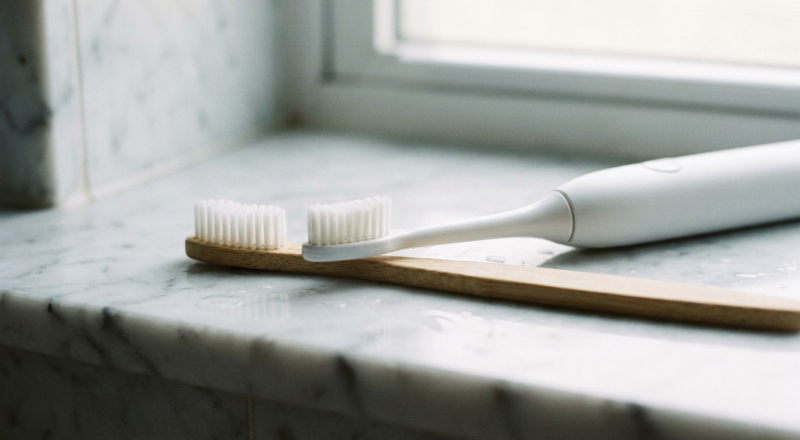
For enamel specifically, the electric toothbrush wins for most people, but not because it cleans harder. It wins because pressure sensors and two-minute timers remove the two habits that actually wear enamel and gums: scrubbing too hard and rushing.
A well-used manual brush in a light hand does the same job. The brush is the tool. Your technique is the variable that decides the outcome.
What actually wears enamel while you brush
Enamel is the hardest tissue in your body, and a nylon bristle cannot scratch it on its own. Damage shows up when three things stack: heavy pressure, an abrasive paste, and a sawing side-to-side motion.
The visible casualty is usually not the enamel on the crown. It is the softer root surface exposed by gum recession, which abrades far faster and is the reason aggressive brushers end up with notches at the gumline.
Paste choice compounds it. Highly abrasive formulas amplify whatever force you apply, which is the mechanism behind most concerns about whether whitening toothpaste damages enamel.
Where electric brushes have the real edge
Cochrane Oral Health reviews of powered versus manual brushing have reported modest but consistent reductions in plaque and gingivitis for powered brushes. Modest is the honest word. This is not a transformation of your mouth.
The enamel benefit is indirect and comes from the hardware:
- Pressure sensors that light up or cut the motor when you lean in, according to manufacturer figures on most mid-range and premium models
- Timers that stop you from cutting the session to forty seconds
- An oscillating or sonic head that does the work, so your hand stops scrubbing
That last point matters most. People who switch often report their brushing feels lazier, which is exactly the goal.
When a manual brush is the better pick
If you already brush with a light touch and a soft head, a manual brush gives you the same protection for a street price of a few dollars.
Manual also wins on control around orthodontics, bridges, and single crowded teeth, and it never runs out of charge mid-trip.
Some people find the vibration of a sonic head uncomfortable on exposed roots. If cold air or sweets already set your teeth off, understanding what causes tooth sensitivity is a better first step than buying new hardware.
The setup that protects enamel either way
Use a soft or extra-soft head. Medium and hard bristles offer no cleaning advantage and drive recession.
Hold the brush like a pen, not a fist. Angle it 45 degrees toward the gumline and let the bristles sit rather than scrub.
Wait about 30 minutes after anything acidic, since brushing softened enamel is where measurable loss happens. Replace the head every three months, or sooner once the bristles splay.
Buy the electric if it makes you brush longer and gentler. Keep the manual if your technique is already clean. Neither choice matters as much as the two minutes you actually spend.