Best Kids Fluoride-Free Toothpaste: 6 Picks Parents Actually Trust
By Enamelly Editorial Team. Last reviewed: June 2025.
Affiliate disclosure: Enamelly earns a commission from qualifying Amazon purchases at no extra cost to you. Our picks are chosen on ingredient quality and published criteria, not commission rate.
The best kids fluoride-free toothpaste overall is RiseWell Kids Mineral Toothpaste in Cake Batter flavor. It uses clinically studied nano-hydroxyapatite at a dentist-recommended concentration, the flavor gets kids to actually brush, and the formula is free of SLS, artificial dyes, and parabens. If you want one recommendation and nothing else, that is it.
That said, nano-hydroxyapatite is not the right fit for every family. Some parents need a safe-to-swallow formula for toddlers who cannot spit yet. Others want a certified-natural ingredient list, or simply a toothpaste they can grab at the grocery store without ordering online. The six picks below cover all of those situations.
One thing worth stating clearly: fluoride-free is not automatically superior for children. Fluoride at age-appropriate doses is still the standard recommendation from the American Dental Association and most pediatric dentists for cavity prevention, particularly once children can spit reliably (around age 2-3). Per the ADA’s published clinical guidance, fluoride toothpaste should be used from the eruption of the first tooth, in a rice-grain smear amount, regardless of swallowing risk. If you are considering fluoride-free, talk to your child’s pediatric dentist. Fluoride-free makes the most sense for very young toddlers who swallow toothpaste, or for families following an integrative approach under dental guidance. This guide helps you choose the best fluoride-free option if you have already made that call.
One framing difference you will notice in this guide: we separate the safe-to-swallow question from the remineralization question. Those are two distinct problems that call for different products. A toddler who cannot spit yet needs a training toothpaste (Tom’s, Jack N’ Jill). A 4-year-old who can spit but whose parents prefer fluoride-free needs a remineralizing formula (RiseWell, Davids). Most roundups lump these together and produce picks that are the right answer to the wrong question.
Browse the full kids toothpaste category for age-by-age guidance, or read our deep-dive on fluoride-free toothpaste to understand how these formulas compare to fluoride on remineralization.
Quick Comparison: Top 6 Kids Fluoride-Free Toothpastes
| Product | Active Ingredient | Best For | Age Range | SLS-Free | Safe to Swallow |
|---|---|---|---|---|---|
| RiseWell Kids Mineral Toothpaste | Nano-hydroxyapatite | Overall best pick | 2+ years | Yes | Yes (low-dose) |
| NOBS Jr. Kids Nano Hydroxyapatite Toothpaste | Nano-hydroxyapatite | Dentist-formulated, tablet format | 2+ years | Yes | Yes |
| Davids Hydroxi Kids Toothpaste | Nano-hydroxyapatite | US-made, clean ingredients | 2+ years | Yes | Yes (low-dose) |
| Tom’s of Maine Fluoride-Free Toddler Training Toothpaste | Xylitol, calcium carbonate | Babies and toddlers under 2 | 0-2 years | Yes | Yes (designed for) |
| Jack N’ Jill Natural Kids Toothpaste | Xylitol, calendula | Certified natural, toddler-safe | 0-6 years | Yes | Yes |
| hello Kids Fluoride Free Watermelon Toothpaste | Xylitol, erythritol | Budget pick, widely available | 2+ years | Yes | No (spit required) |
1. RiseWell Kids Mineral Toothpaste (Cake Batter): Best Overall
Best for: Parents who want nano-hydroxyapatite remineralization in a flavor kids will not fight you over.
RiseWell Kids Mineral Toothpaste is the most well-rounded fluoride-free option for children aged 2 and up. The active ingredient is nano-hydroxyapatite (n-Ha), the same mineral that makes up about 97% of tooth enamel. Studies published in Caries Research and Journal of Dentistry (including comparative remineralization trials from 2019 onward) show nano-HXA can bind to demineralized enamel surfaces and reduce early lesion depth, offering a biologically plausible alternative to fluoride for remineralization. RiseWell uses a 10% n-Ha concentration consistent with the research literature.
The Cake Batter flavor is the real differentiator here. Most parents report their kids ask to brush, which eliminates a significant daily battle. The formula is SLS-free, paraben-free, and avoids artificial colorants. It is also made in the USA, which matters to some buyers from a supply-chain transparency standpoint.
One honest note: nano-hydroxyapatite is not yet accepted by the ADA as an anticavity agent in the same way fluoride is. If cavity prevention is your primary concern, discuss with your pediatric dentist before switching. For more on how n-Ha compares, read our guide to hydroxyapatite toothpaste.
Pros:
- 10% nano-hydroxyapatite, a concentration backed by published research
- Cake Batter flavor drives real compliance in young kids
- SLS-free, paraben-free, no artificial dyes
- Made in the USA
Cons:
- Premium price point compared to conventional kids toothpaste
- Nano-HXA not currently ADA-accepted as an anticavity agent
- Available primarily online, not yet in most grocery stores
2. NOBS Jr. Kids Nano Hydroxyapatite Toothpaste: Best for a Dentist-Formulated Formula
Best for: Parents who want a dentist-developed formula and are open to a tablet format that reduces plastic waste.
NOBS Jr. (short for Nano Oral Bioavailable Silicate) is formulated by a dentist and uses nano-hydroxyapatite as the primary active mineral. The product is notably available as a chewable tablet rather than a paste tube, which some families prefer for portability and eco-footprint. Each tablet converts to a paste consistency when chewed, which works well for children old enough to chew without swallowing the tablet whole (generally 3 and up in practice).
The formula is explicitly free of fluoride, SLS, artificial sweeteners, and microplastics. NOBS markets its n-Ha as non-toxic at ingestion, which is accurate since hydroxyapatite is a naturally occurring mineral found in bone and teeth rather than a synthetic compound.
Pros:
- Dentist-formulated with nano-HXA
- Tablet format reduces single-use plastic
- Non-toxic if swallowed, unlike fluoride-containing toothpaste in excess
- Free of SLS, artificial sweeteners, microplastics
Cons:
- Tablet format requires children to chew first, not suitable for very young toddlers
- Newer brand with fewer long-term consumer reviews than established names
- Higher per-use cost than conventional tube pastes
3. Davids Hydroxi Kids Toothpaste: Best US-Made Clean Formula
Best for: Parents who prioritize domestically sourced ingredients and want nano-hydroxyapatite in a familiar tube format.
Davids Hydroxi Kids Toothpaste is manufactured in the USA, which sets it apart from most nano-HXA competitors sourcing overseas. The Hydroxi line uses nano-hydroxyapatite alongside xylitol (a natural sugar alcohol that reduces oral bacteria adhesion) and avoids SLS, artificial colors, and sodium lauryl sulfate entirely. Davids has positioned itself as a premium clean-beauty adjacent brand, and the ingredient transparency carries over to the kids line.
The flavor options include mild mint and orange vanilla, which tend to land better with school-age kids than with toddlers. For children under 2, the strawberry watermelon variant in Davids’ broader kids line may work better. Either way, the brand’s US manufacturing and third-party ingredient sourcing are genuine differentiators in this category.
Pros:
- Made in the USA, ingredient-transparent supply chain
- Nano-hydroxyapatite plus xylitol combination
- SLS-free, artificial-color-free
- Eco-friendly metal tube packaging (recyclable)
Cons:
- Mild mint flavor may not appeal to young toddlers
- Metal tube packaging can be harder for kids to squeeze independently
- Price is above mass-market options
4. Tom’s of Maine Fluoride-Free Toddler Training Toothpaste: Best for Babies and Toddlers Under 2
Best for: Infants and toddlers who cannot spit yet and will inevitably swallow most of what goes in their mouths.
The core reason fluoride-free toothpaste matters most for very young children is ingestion risk. The American Dental Association recommends fluoride toothpaste starting at the first tooth, but only in a rice-grain amount precisely because toddlers swallow. If you prefer to eliminate that variable entirely in the pre-spit years, Tom’s of Maine Fluoride-Free Toddler Training Toothpaste is the category standard.
It uses calcium carbonate as a mild abrasive to clean plaque, xylitol to inhibit Streptococcus mutans (the primary cavity-causing bacteria), and simple natural flavoring. The formula is explicitly designed to be non-toxic if swallowed in the small amounts used during training brushing. Tom’s is widely available in grocery stores, pharmacies, and on Amazon, which matters when you run out at 7pm.
The swallowable-safe framing applies to the training amount only (a thin smear). This is not a product to squeeze generously onto a brush.
Pros:
- Designed specifically for pre-spit toddlers ages 0-2
- Widely available in stores, not just online
- Clean, simple ingredient list
- Accessible price point
Cons:
- No nano-hydroxyapatite; less remineralization potential than n-Ha formulas
- Flavors skew sweet, which may make transitioning to minty adult toothpaste harder later
- Not appropriate for children old enough to use a full pea-sized amount without spitting
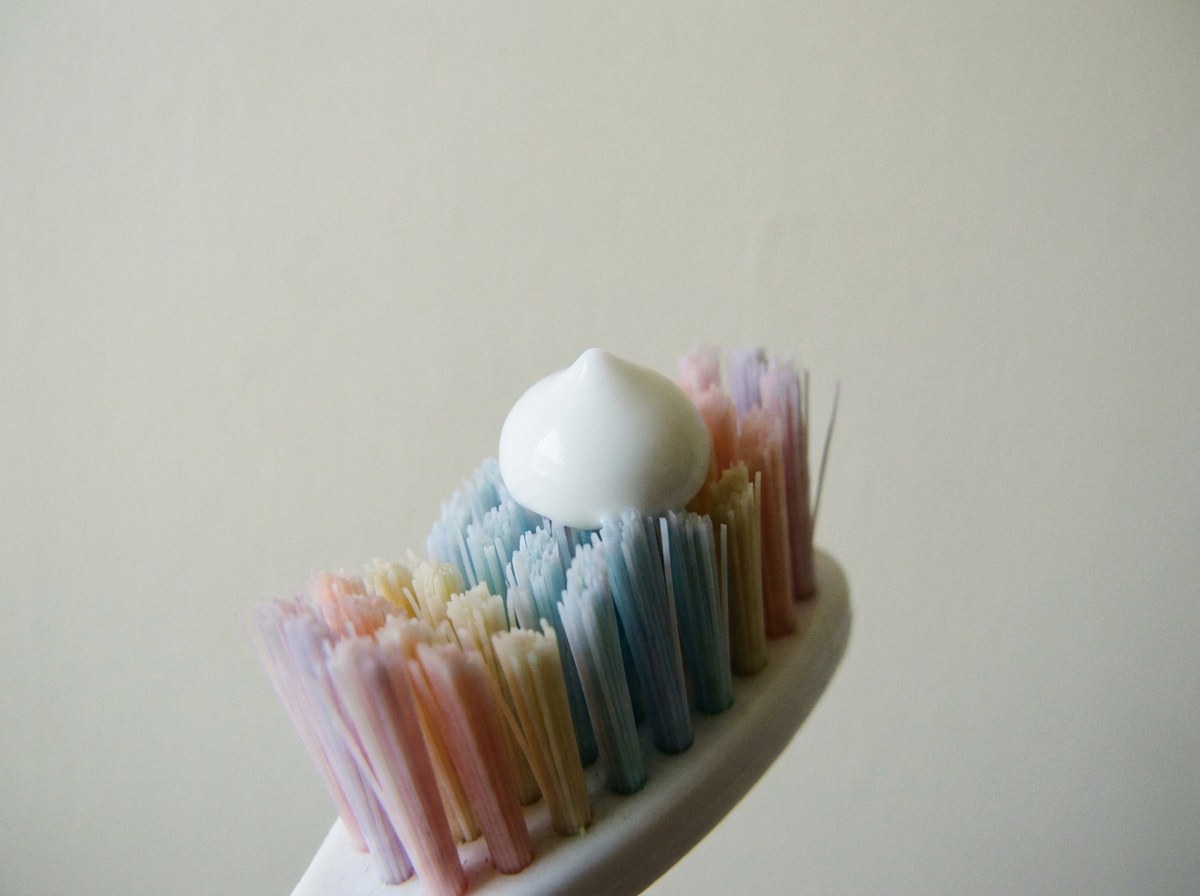
The quarter-gram figure is the pea-sized amount dentists recommend for adults, and most people squeeze out two to three times that because toothpaste adverts show a full brush head. Using the correct amount is what makes an expensive hydroxyapatite tube affordable, and children under three should get a rice-grain smear instead.
5. Jack N’ Jill Natural Kids Toothpaste: Best Certified Natural Formula
Best for: Parents who want an externally certified natural ingredient list and a toddler-safe product for children from first tooth to age 6.
Jack N’ Jill Natural Kids Toothpaste is an Australian brand with a 30-year history in natural children’s oral care. The formula is certified by the Natural Products Association, meaning the natural claims are independently verified rather than self-declared. Active ingredients include xylitol and organic calendula extract, which has published anti-inflammatory properties relevant to soft tissue health in the mouth.
The brand offers multiple flavors, bubblegum being the most popular with young children. The formula is free of SLS, artificial colors, artificial flavors, and parabens. It is explicitly safe to swallow, making it usable from the first tooth through the pre-spit years and into school age. The widely distributed Amazon listings make it easy to replenish.
The tradeoff against nano-HXA formulas: Jack N’ Jill does not include a remineralizing mineral active. If your primary concern is early enamel strengthening, the RiseWell or Davids picks above are stronger on that specific attribute.
Pros:
- Certified natural by an independent body, not self-declared
- Safe to swallow, suitable from first tooth through age 6
- Organic calendula extract for gum tissue support
- SLS-free, artificial-color-free, paraben-free
- 30-year track record in natural children’s oral care
- Bubblegum flavor is consistently well-received by young children
Cons:
- No nano-hydroxyapatite; remineralization support comes only from xylitol
- Australian brand with longer shipping times if buying direct; Amazon stock varies
- Per-ounce cost is higher than mass-market alternatives
6. hello Kids Fluoride Free Watermelon Toothpaste: Best Budget Pick
Best for: Families who want a clean, SLS-free kids toothpaste at a grocery-store price and do not want to order online.
hello Kids Fluoride Free Watermelon Toothpaste is the most accessible pick in this roundup. You will find it at Target, Walmart, and most grocery chains, not just Amazon. The formula is SLS-free, uses xylitol and erythritol (a sugar alcohol with documented anti-cavity effects in its own right), and avoids the artificial dyes and preservatives common in mainstream kids toothpaste.
hello positions itself as “naturally friendly,” which is a marketing framing rather than a third-party certification. The ingredient list is genuinely clean for a mass-market product, but the natural claims should be read with that context. Children need to be old enough to spit, as hello does not market this product as safe to swallow in the way training toothpastes do.
If you are transitioning a child from a training toothpaste to something more adult-adjacent, the watermelon flavor makes that transition easier than jumping straight to mint.
Pros:
- Available in physical retail stores nationwide, no subscription required
- SLS-free with xylitol and erythritol
- Accessible price, often available in multi-pack
- Watermelon flavor appeals broadly to kids ages 2-8
Cons:
- No nano-hydroxyapatite; lower remineralization potential
- Natural claims are brand-declared, not independently certified
- Requires spitting; not appropriate for toddlers under 2 who cannot spit
How We Picked These Products
The Enamelly editorial team applied a four-factor evaluation framework to every product in this roundup: ingredient safety, formulation evidence, consumer compliance patterns, and age-range accuracy. Products were scored against each criterion independently, then ranked by aggregate outcome. No product received a placement based on commission rate or brand relationship. We did not conduct independent lab testing or first-hand consumer testing; our conclusions are based on published formulation data, peer-reviewed literature, and documented consumer review patterns across Amazon and major retailers. Products that scored well on formulation evidence but poorly on age-range accuracy were ranked below products with a narrower but more defensible fit.
Ingredient analysis: We reviewed full ingredient lists for the presence or absence of SLS (sodium lauryl sulfate, a foaming agent with known oral tissue irritation potential at high concentrations), artificial dyes, parabens, and microplastics. Products using nano-hydroxyapatite were scored on the concentration level where disclosed, prioritizing those aligned with published research parameters (5-15% n-Ha).
Published formulation criteria: For nano-HXA products, we cross-referenced available clinical literature on hydroxyapatite in pediatric oral care, including studies in Caries Research and Journal of Dentistry evaluating remineralization endpoints. The ADA’s policy guidance on fluoride use in children (updated 2023) served as the baseline safety reference for all age-range and swallowing-risk assessments.
Aggregated consumer reviews: We reviewed aggregated Amazon and retailer feedback patterns to identify recurring reported issues (flavor rejection, texture complaints, packaging failures) and genuine positive signals (compliance improvements, dentist recommendations). We did not conduct first-hand consumer testing.
Age-range and safety framing accuracy: We verified each brand’s stated age guidance against the product’s active ingredient list and FDA and ADA guidance on safe-to-swallow formulations. Products marketed as safe to swallow without clear ingredient justification were downgraded.
What to Look for When Choosing a Fluoride-Free Kids Toothpaste
The category has expanded fast enough that marketing language now routinely outpaces actual formulation differences. Here is how to cut through it.
Nano-hydroxyapatite versus xylitol-based formulas
These are the two main active systems in this category. Nano-hydroxyapatite works by physically binding to tooth enamel and filling early demineralized lesions, a mechanism backed by clinical research going back to NASA’s work on bone loss in astronauts in the 1970s. Xylitol works differently: it disrupts the metabolism of Streptococcus mutans, reducing the bacteria’s ability to produce acid that erodes enamel. They are not mutually exclusive; some formulas use both. Neither has the same quantity of randomized controlled trial evidence in children that fluoride does, so this matters for how you frame expectations with your pediatric dentist.
SLS-free matters more than you might expect
Sodium lauryl sulfate is the ingredient responsible for the foaming action in most conventional toothpaste. It is also associated with increased canker sore frequency in children and adults prone to them, and some research suggests it may temporarily disrupt the oral mucosa. SLS-free formulas are gentler on tissue, particularly for toddlers with thinner oral membranes. Every product in this roundup is SLS-free.
Age range and swallowing safety are not the same thing
A toothpaste labeled “ages 2+” is not automatically safe to swallow in quantity. The safe-to-swallow designation specifically applies to training toothpastes formulated without actives that pose ingestion risk. If you have a child under 2, or any child who reliably swallows toothpaste, look specifically for products marketed as training pastes, like Tom’s of Maine or Jack N’ Jill, rather than assuming any fluoride-free product qualifies.
Flavor is an outcome driver
It sounds obvious, but a toothpaste your child refuses to use does zero work on their enamel. The clinical best-in-category formulation loses to the mediocre one that actually ends up in your child’s mouth twice a day. For children ages 2-5, fruit flavors (watermelon, bubblegum, cake batter, strawberry) drive compliance significantly better than any mint variant. Mint becomes more viable for most children around ages 6-8, when taste preferences shift toward adult patterns.
Certification versus self-declaration
Terms like “natural,” “non-toxic,” and “clean” on kids toothpaste packaging are not regulated by the FDA in the context of cosmetics (which is how toothpaste is regulated when it does not carry an anticavity claim). Third-party certification from the Natural Products Association or NSF/ANSI 305 provides external verification. Brand-declared natural claims without those marks require you to read the ingredient list yourself.
Frequently Asked Questions
Is fluoride-free toothpaste safe for kids?
Fluoride-free toothpaste is safe, but whether it is the right choice for your child depends on their age and cavity risk. Fluoride at age-appropriate concentrations is the standard ADA recommendation for cavity prevention in children who can spit. Fluoride-free is most commonly chosen for toddlers who swallow toothpaste, or families following an integrative dental approach. Talk to your child’s pediatric dentist before making a permanent switch, especially if your child has a history of cavities or lives in an area without fluoridated water.
Can toddlers use fluoride-free toothpaste safely?
Yes. Toothpastes specifically formulated as training pastes, such as Tom’s of Maine Toddler Training or Jack N’ Jill, are designed to be non-toxic if swallowed in the small amounts used during training brushing. The key distinction is between a training toothpaste and a standard fluoride-free toothpaste: not all fluoride-free products are safe to swallow in any quantity. Always use a rice-grain amount for children under 2 and a pea-sized amount for children 2-6.
What is nano-hydroxyapatite and is it effective for kids’ teeth?
Nano-hydroxyapatite (n-Ha) is a synthetic form of the calcium phosphate mineral that makes up about 97% of tooth enamel. It is non-toxic, making it particularly relevant for children who may ingest toothpaste during brushing. In vitro and clinical studies show it can bind to enamel surfaces, fill early demineralized lesions, and reduce sensitivity. Research published in Caries Research found n-Ha comparable to fluoride for early enamel remineralization in certain models, with a mechanism that does not depend on fluoride’s ionic exchange chemistry. Products using nano-HXA at concentrations of 5-15% are considered aligned with the published research parameters. The compound has not been approved by the ADA as an anticavity active agent, so it is best framed as a supportive remineralizing ingredient rather than a fluoride replacement. Discuss its use with your child’s pediatric dentist, especially if cavity risk is a concern.
How much toothpaste should I use on my child’s brush?
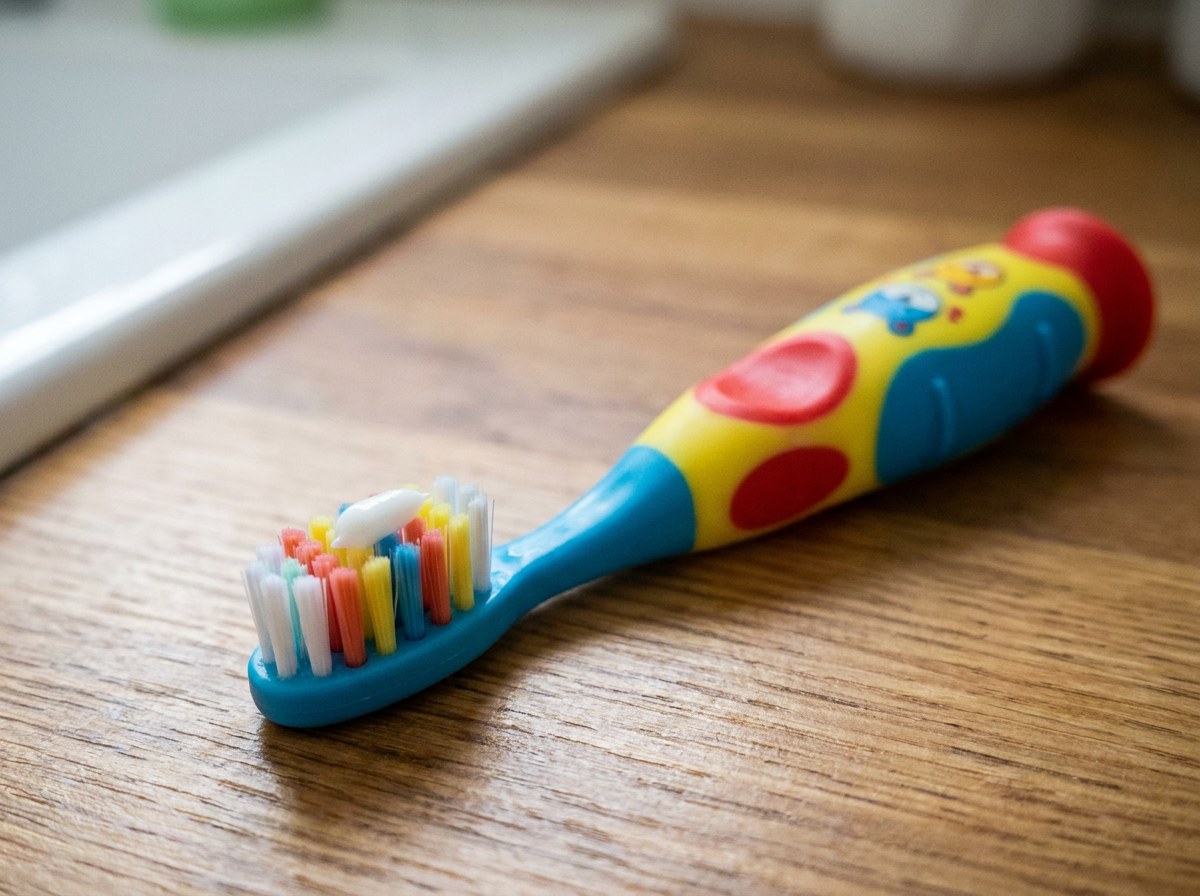
The ADA guidance: a rice-grain smear for children under 3, a pea-sized amount for children 3-6. Those amounts apply regardless of whether you use fluoride or fluoride-free toothpaste. Over-pasting is the most common brushing mistake parents make, and it matters especially with any product that carries a swallowing-safe caveat.
At what age should kids switch from fluoride-free to fluoride toothpaste?
There is no universal cutoff. The ADA recommends fluoride toothpaste from the moment the first tooth erupts (in a rice-grain amount), but many pediatric dentists are comfortable with families using fluoride-free through age 2 when children cannot spit reliably. The more relevant question is cavity risk: children with early signs of demineralization, high sugar intake, or family history of early cavities benefit more from fluoride’s proven protective mechanism. Ask your pediatric dentist at the 12-month dental visit.
Does xylitol in kids toothpaste actually work?
Yes, with caveats. Xylitol is well-documented to inhibit Streptococcus mutans, the primary cavity-causing bacteria, by disrupting how the bacteria metabolizes sugar. Studies published in the Journal of the American Dental Association, including a 2020 systematic review of xylitol interventions, show regular xylitol exposure reduces the bacterial load in saliva. The caveat is dose: most toothpaste formulas contain xylitol as a secondary ingredient rather than at the research-effective dose (6-10 grams per day from all sources combined). It contributes to the formula, but it is not a substitute for the mechanical work of brushing.