Do Water Flossers Actually Replace String Floss?
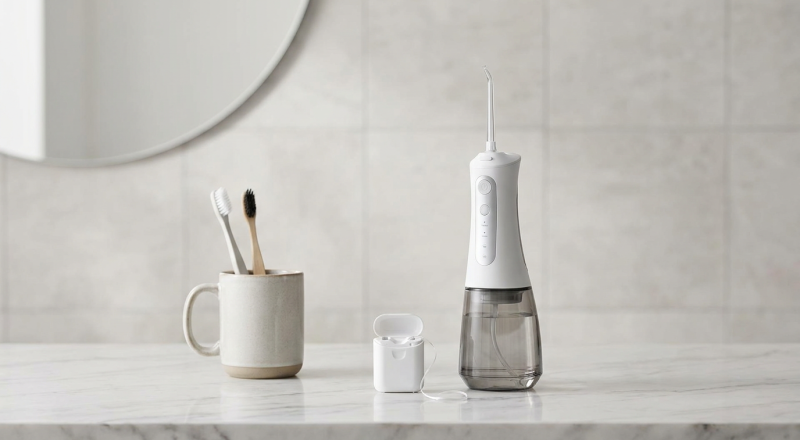
For most people, no. A water flosser is an excellent addition and a genuine substitute in specific situations, but dental authorities, including the American Dental Association, still describe interdental cleaning that mechanically scrapes the tooth surface, meaning string floss or interdental brushes, as the standard. Water alone rinses; it does not scrape plaque biofilm off enamel.
What the evidence supports
Studies reviewed for the ADA Seal show water flossers reduce gingivitis and bleeding compared with string floss alone in several trials, particularly around braces and implants. The honest reading: they work well, and the effect is strongest where floss is physically hard to use. What the evidence does not show is that a water jet clears established plaque as reliably as a surface-wiping tool.
Who can genuinely rely on one
People with braces, bridges, implants, arthritis, or dexterity limits often get better real world cleaning from an irrigator than from floss they cannot manipulate properly. In those cases a device used daily beats floss used badly, and that trade is worth making. If your gums already bleed, read our primer on toothpaste for bleeding gums alongside any tool change.
For everyone else, the strongest routine combines both: floss or an interdental brush to wipe the surfaces, then the irrigator to flush the pockets and debris. That order matters. Cleaning technique overall drives results more than the tool, a point we make in manual versus electric brushing.
Bottom line on the question
Use a water flosser as your only interdental cleaner if flossing is impractical for you, and be strict about daily use and technique. If you can floss comfortably, keep flossing and treat the irrigator as the second step. Gum health compounds over years, the same long game behind natural remineralization.