Why Do My Teeth Hurt More at Night?
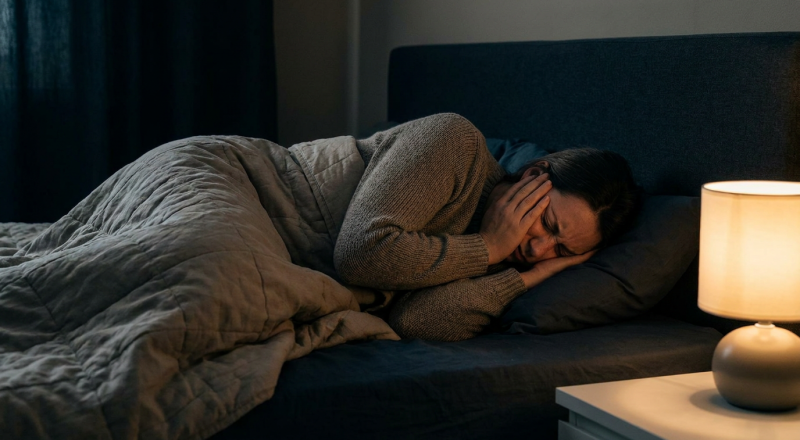
Teeth often hurt more at night for a few overlapping reasons: you lie down and blood flow to your head increases, there are fewer distractions to pull your attention away from the pain, and many people clench or grind while they sleep. Together these make an ache you barely noticed by day feel sharper after dark.
If the pain is new, persistent, or throbbing, that is a signal to see a dentist rather than wait it out.
Why the ache ramps up after dark
Lying flat raises blood pressure in the vessels around your head slightly, which can increase pressure on an inflamed tooth or nerve. That is why a dull daytime ache can feel like a throb once your head hits the pillow.
Daytime noise, work, and movement distract your brain from low-grade pain. At night that competition disappears, so the same signal feels louder.
Nighttime clenching, known as bruxism, is common and often unconscious. Hours of pressure can leave teeth sore and sensitive by morning, and the discomfort often peaks in bed.
Common causes worth checking
Sensitivity to temperature or sweets can point to worn enamel or exposed dentin. Our guide on what causes tooth sensitivity walks through the usual triggers.
A cavity, cracked tooth, or gum inflammation can also flare at night. These need a dentist, not just a change of toothpaste.
What can help tonight
Sleep with your head slightly elevated to ease the blood-flow pressure. Avoid very hot, cold, or sugary food close to bedtime.
If grinding is the cause, a dentist may suggest a night guard. For everyday sensitivity, some people find relief with the right formula, though it helps to know whether sensitivity toothpaste works for your specific cause before relying on it.
A desensitizing option, such as a toothpaste for sensitive teeth, can reduce nerve signals over a couple of weeks, but ongoing or severe pain still needs a professional diagnosis.