Is Fluoride-Free Toothpaste Better for Kids?
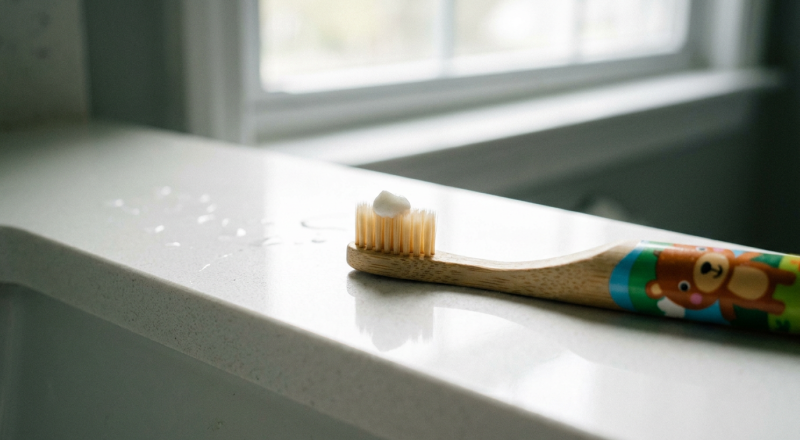
Fluoride-free toothpaste is not automatically better for kids. Major dental groups still recommend fluoride as the most proven way to prevent cavities in children, and for young kids the real issue is usually the amount used, not whether fluoride is present. Some families choose fluoride-free for specific reasons, and that can work with the right routine.
Why fluoride is usually recommended
Fluoride strengthens enamel and helps reverse early decay, and that benefit is well documented in children. The concern parents often hear about, dental fluorosis, is mostly cosmetic and tied to swallowing too much toothpaste over time, not to normal supervised brushing.
Pediatric dental guidance generally suggests a rice-grain smear for children under three and a pea-sized amount after that, with an adult watching. Getting that dose right addresses most safety worries on its own.
When parents consider fluoride-free
Some choose fluoride-free because a very young child cannot spit reliably yet, or out of personal preference. Many modern fluoride-free options use hydroxyapatite, an ingredient that aims to remineralize enamel through a different mechanism.
The research on hydroxyapatite in kids is growing but younger than the decades of data behind fluoride. If you are weighing this route, our overview of whether fluoride-free toothpaste is safe lays out what the evidence currently shows.
How to choose for your child
Match the choice to your child’s cavity risk. A kid with frequent cavities usually benefits from fluoride, while a low-risk child whose parents prefer fluoride-free may do fine with a quality hydroxyapatite paste and good habits.
For age-appropriate picks, our guide to the best kids toothpaste compares options, and our notes on safe toothpaste for babies and toddlers cover the youngest ages.
Whatever you pick, supervise brushing, control the amount, and check in with your child’s dentist, who knows their specific risk better than any label does.