Does Whitening Toothpaste Damage Enamel?
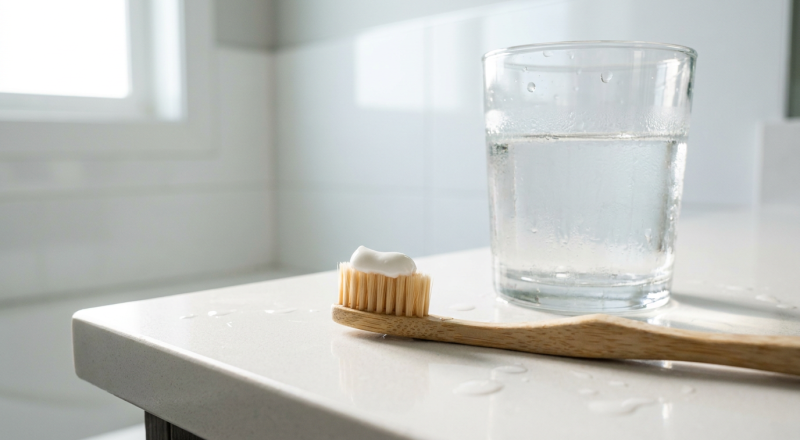
Whitening toothpaste does not damage enamel when you use a standard product as directed, according to how most dentists and dental researchers describe it. The concern comes down to abrasion, and mainstream whitening pastes are formulated to stay within safe limits.
The real risk is misuse: scrubbing hard, brushing too often, or leaning on unusually gritty homemade mixes.
How whitening toothpaste works
Most whitening pastes lift surface stains two ways. Mild abrasives polish away the film left by coffee, tea, and wine, and some formulas add a low dose of peroxide to break down deeper staining.
Neither mechanism dissolves enamel the way acid does. Abrasives are measured by an RDA score, and reputable brands stay well under the level regulators consider safe for daily use.
That said, enamel does not grow back, so it is worth using any abrasive product sensibly. For the background on structure, our teeth remineralization guide explains what enamel is and is not capable of.
When whitening toothpaste can cause harm
Trouble usually starts with technique, not the tube. Brushing hard with a stiff brush, or brushing right after acidic food or drink when enamel is softened, can wear the surface over time.
Sensitivity is the more common complaint, especially with peroxide formulas. It is usually temporary and eases when you cut back frequency, though lingering pain is worth raising with your dentist.
Charcoal and baking-soda-heavy pastes are the ones researchers flag most, since some are more abrasive than standard whitening formulas.
How to whiten safely
Use a soft-bristled brush, gentle pressure, and a pea-sized amount twice a day. Wait about 30 minutes after acidic meals before you brush.
If sensitivity is your main worry, a gentler approach beats a stronger paste. Weigh the options in our look at whether whitening toothpaste works, then see the best whitening toothpaste picks chosen for lower abrasion.