Dental Chews vs Toothpaste: Which Actually Cleans Teeth?
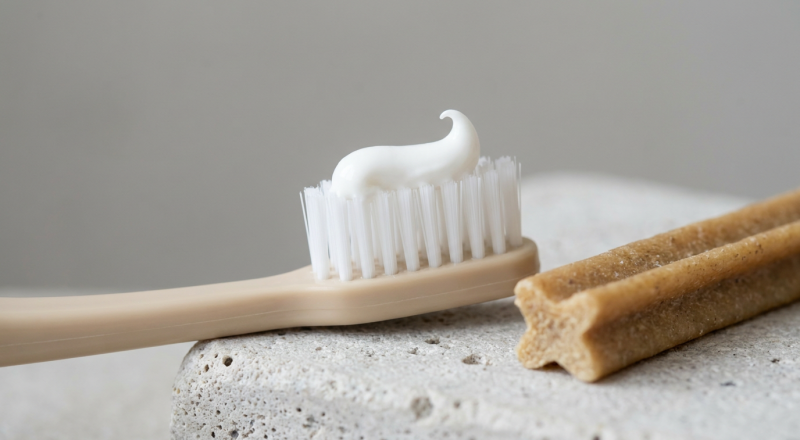
Brushing wins. A brush plus toothpaste is the only routine that physically wipes plaque off the tooth surface and the gumline before it hardens into tartar. Dental chews help, but they clean the wrong parts of the mouth to replace brushing.
What each method actually reaches
A brush reaches the gumline, which is where periodontal disease begins. Chews clean by abrasion while your dog gnaws, so they scrub the broad surfaces of the back chewing teeth and largely skip the incisors, the canines, and the narrow margin where gum meets tooth.
That gap is the whole argument. Gum inflammation, not surface film, is what progresses toward bone loss and extractions. If the habit feels impossible, the practical fix is a routine, and the step-by-step way to brush a dog’s teeth is built in short sessions over a couple of weeks rather than one wrestling match.
Where chews earn their place
Chews buy you mechanical cleaning on days you miss, and they keep working while you are at the office. For dogs that refuse a brush entirely, a chew is meaningfully better than nothing.
Look for the Veterinary Oral Health Council seal. The VOHC reviews submitted trial data and awards its seal to products that met a defined plaque or tartar reduction standard, which is a far better filter than packaging claims.
Watch hardness. Very hard chews, antlers, and hooves are linked to slab fractures of the upper premolars in veterinary dental practice. A chew should flex or crumble under pressure, not ring like bone.
How to combine them
Brush daily if you can, and at least three times a week otherwise. Plaque begins mineralizing within roughly a day or two, so frequency matters more than how long each session lasts.
Use a pet-specific paste. Human formulas contain foaming agents and sometimes xylitol, neither of which belongs in a mouth that swallows everything. Enzymatic pastes add a chemical layer on top of the mechanical one, and the practical differences between enzymatic and non-enzymatic pet toothpaste come down to how much you trust a paste to work without much scrubbing.
Then add one chew on the days a full brushing does not happen. That pairing covers both the gumline and the chewing surfaces.
What neither one fixes
Tartar that has already calcified does not come off with a brush or a chew. It needs a scaling under anesthesia, and no home product dissolves it, whatever the label suggests.
Home care is prevention, not treatment. Once you see brown deposits along the gumline, bad breath that does not fade, or red swollen gums, the next step is a veterinary exam rather than a stronger chew.
If you are choosing a paste to start with, compare the options in our roundup of the best dog toothpaste and pick a flavor your dog will tolerate. Compliance beats formulation every time.