Signs of Dental Disease in Cats You Shouldn’t Ignore
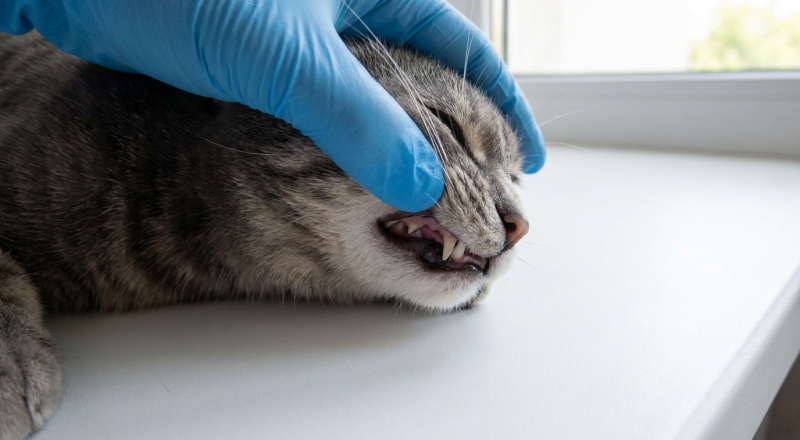
Breath strong enough to make you turn your head is the most common early sign of dental disease in cats. Add a red gum line, brown tartar on the back teeth, or a cat that chews on one side only, and you are looking at a mouth that needs a veterinary exam rather than a wait-and-see approach.
Cats hide oral pain unusually well. Most keep eating straight through advanced disease, so a normal appetite proves nothing about how that mouth feels.
What to look for first
- Persistent bad breath, noticeably worse than ordinary fishy cat breath
- A red or puffy band of gum where tooth meets gum
- Yellow-brown tartar, usually worst on the upper back teeth
- Drooling, sometimes tinged pink
- Dropping kibble mid-bite, or chewing on one side
- Less grooming, so a coat that suddenly looks unkempt
Lift the lip and look at the canines and the large upper premolars. Plaque hardens there first, which means you can spot trouble months before your cat shows any pain.
Signs that need a vet this week
Facial swelling below one eye, bleeding from the mouth, a tooth worn down to a stub, a paw repeatedly going to the muzzle, or sudden refusal of dry food. Any of those points to something past the reversible stage.
Weight loss with an apparently normal appetite belongs on that list too. A cat can want food badly and still find chewing it unbearable.
The three problems behind most of it
Gingivitis is inflammation of the gum only, and it is the reversible stage. Periodontitis means the attachment holding the tooth has started to break down, and veterinary dental sources describe it as one of the most commonly diagnosed conditions in adult cats.
Tooth resorption is the one owners rarely expect. The tooth structure itself erodes, often at the gum line, and it hurts. It is diagnosed with dental X-rays under anesthesia, not by looking.
Severe, widespread mouth inflammation in a cat can also point to stomatitis, which is treated as its own condition rather than plain tartar buildup.
What you can do between vet visits
Home care slows plaque, it does not remove tartar that has already hardened. Only a veterinary cleaning does that.
Daily brushing is the tool with the best evidence behind it, and it is more achievable than most owners expect once the cat is desensitized in short sessions. Our guide on how to brush a cat’s teeth walks through that build-up week by week.
Use a paste formulated for cats, since human toothpaste is not safe for them to swallow. If you are choosing one, compare options in our roundup of the best cat toothpaste, and read the wider cat and dog dental care overview if you have both species at home.
Check the gum line once a month. Two minutes with a lifted lip is how most owners catch this early.