Toothbrush Replacement Heads: When to Swap and What Fits
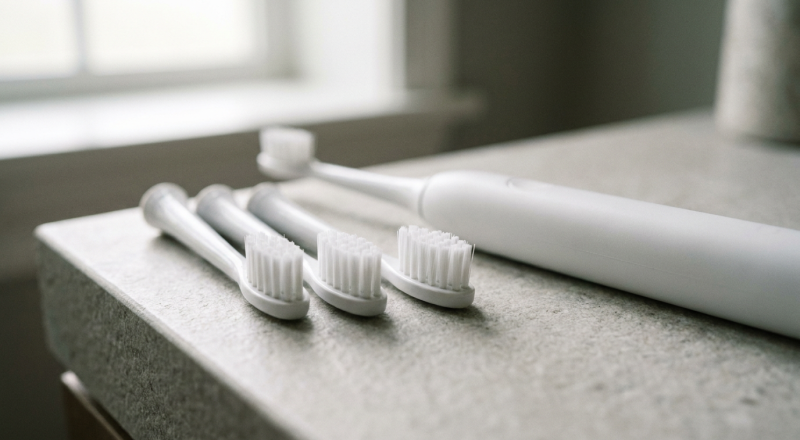
Replace an electric toothbrush head about every three months, and sooner if the bristles have splayed out past the edge of the head. That matches long-standing American Dental Association guidance for manual brushes, and most brush head makers print the same interval on the box.
The bristle test beats the calendar
Three months is an average, not a deadline. Brush with heavy pressure and the bristles can flatten in six or seven weeks, and a flattened head slides over plaque instead of flicking it out of the gumline.
Look at the head from directly above. Bristle tips leaning outward past the plastic housing mean the head is finished, whatever the calendar says. Many heads also carry colored indicator bristles that fade toward white as they wear, which gives you a rough visual cue between checks.
Two other swap triggers are worth keeping in mind: change the head after an illness with a fever, and change it immediately if it ends up in the sink or gets used by someone else. Pressure is the main accelerant, which is why your soft vs medium bristle choice also changes how fast a head wears out.
What actually fits your handle
Brush heads are not a universal part, and the mismatches are easy to miss in a store aisle. Read the compatibility list on the packaging before you commit to a multipack.
- Oral-B round heads interchange across most of the brand’s rechargeable handles, so a CrossAction head will normally seat on a Pro-series handle.
- Oral-B iO is the exception. That line uses its own magnetic attachment, and iO heads will not fit older Oral-B handles.
- Philips Sonicare click-on heads fit the current snap-style handles, while older screw-on Sonicare models take a different head design.
- Generic heads cost less per unit, but fit tolerance varies between production runs, and a loose head rattles instead of transferring motion. Check your handle warranty terms first.
If you are still deciding between systems, the compatibility tax is a real cost of ownership, and it factors into the manual vs electric toothbrush comparison more than most spec sheets admit.
Work out cost per month, not cost per pack
Divide the street price of a pack by the number of heads, then divide again by three. That gives you a monthly figure you can compare across brands honestly.
A four-pack lasts a single user roughly a year at the standard cadence, so buying larger packs usually lowers the monthly number. Two people sharing a handle need double the heads, each with their own colored ring.
Manual brushes follow the same three-month logic and the same bristle test, covered in more depth in our guide to how often you should replace your toothbrush. The habit matters more than the hardware: an old head on a premium handle cleans worse than a fresh head on a cheap one.
If your gums bleed or feel sore after switching to a new head, ease off the pressure for a week and mention it to your dentist or hygienist at your next visit.