White tongue: common causes and when to see a dentist
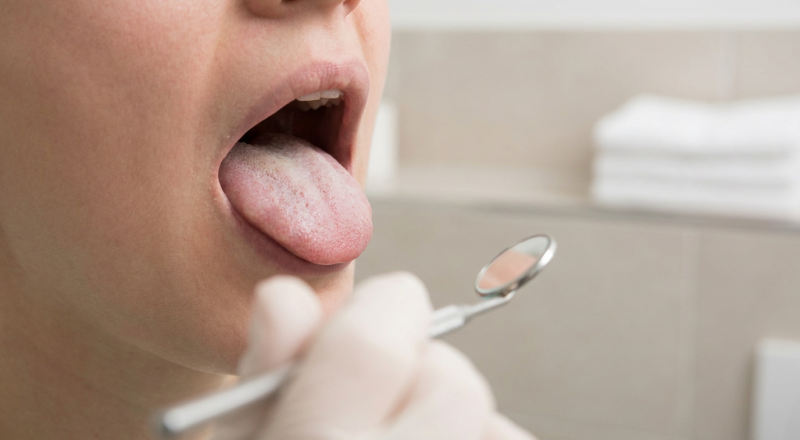
A white coating on your tongue is usually just buildup: dead cells, bacteria, and food debris caught between the small bumps on the tongue’s surface. It clears up with better cleaning in most cases. A coating that will not brush or scrape away, or that comes with pain, points to something else.
What ordinary tongue coating looks like
Ordinary coating is thin, patchy, and temporary. It tends to build up overnight or after sugary food, and a soft toothbrush or a tongue scraper clears most of it in a few passes.
If scraping removes the coating and it does not come back within a day, ordinary buildup is the likely explanation, not a bigger problem.
Causes that need a closer look
Video: Dr Dray
Persistent or painful white patches usually trace back to a smaller set of causes.
Oral thrush, a Candida yeast overgrowth, leaves a cottage-cheese-like coating that can bleed slightly when scraped, according to Mayo Clinic patient guidance.
Leukoplakia forms thick white patches that do not wipe off at all. The American Academy of Oral Medicine names tobacco use and chronic irritation as the leading triggers.
Dehydration thickens saliva and lets dead cells accumulate faster, producing a dry, chalky look rather than distinct patches.
Skipping tongue cleaning lets bacteria and debris build a visible film, which is also why it is worth checking whether your water flosser is reaching areas a toothbrush alone misses.
Comparing the common causes
| Cause | Typical signs | See a dentist? | Source |
|---|---|---|---|
| Ordinary coating | Thin, patchy, clears with cleaning | Not unless it persists | Cleveland Clinic patient education |
| Oral thrush (Candida) | Cottage-cheese texture, may bleed when scraped | Yes | Mayo Clinic |
| Leukoplakia | Thick patches that do not wipe off | Yes | American Academy of Oral Medicine |
| Dehydration | Dry, chalky film, no distinct patches | Not unless it persists after rehydrating | Cleveland Clinic patient education |
| Tobacco use | Persistent white or grayish patches | Yes | American Academy of Oral Medicine |
When to see a dentist
Book an appointment if white patches last more than two weeks, do not scrape off, hurt, or show up alongside bleeding gums. A toothpaste made for bleeding gums can ease mild gum irritation, but it will not treat thrush or leukoplakia.
A dentist can tell the difference with a direct exam and, when needed, a swab. Checking a mirror at home is not reliable for anything beyond ordinary buildup.