Tongue scraper stainless steel: what sets it apart from copper or plastic
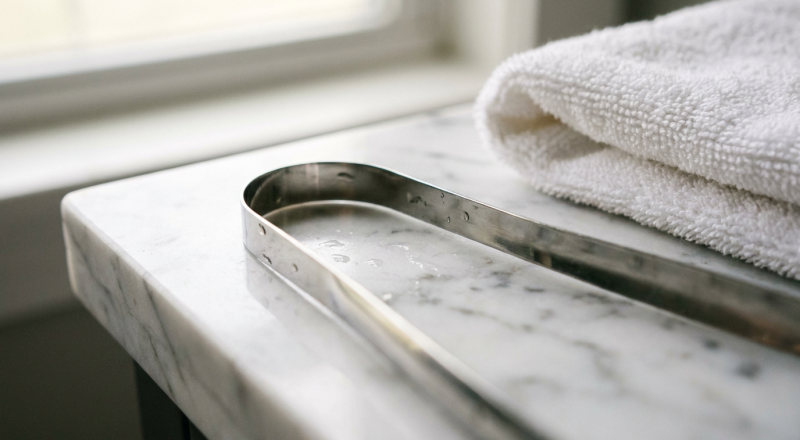
A stainless steel tongue scraper keeps a rigid, smooth edge for years, which is the one thing copper and plastic cannot match. Copper is softer and tarnishes, plastic flexes and scratches, and both change how much coating a single pass removes.
The catch is that not every listing that says stainless is the same steel. The grade decides how the edge holds up to daily use and to what you clean it with.
What the grade number tells you
Most scrapers are made from one of two austenitic alloys, 304 or 316. IQS Directory lists 304 at 18 to 20 percent chromium and 8 to 10.5 percent nickel, while 316 runs 16 to 18 percent chromium, 10 to 14 percent nickel and 2 to 3 percent molybdenum.
That molybdenum is the difference. It raises resistance to pitting from chlorides, which matters if you rinse a scraper in salt water or leave it wet. 316L is the low-carbon version of 316 and the alloy surgical instruments are usually made from.
Both grades are non-magnetic. If a magnet grips a scraper sold as pure copper, the core is plated steel, and if it grips one sold as stainless, the alloy is not a 300-series grade.
Video: Katranji & Nemeth DDS
How the edge behaves on the tongue
Scraping works by dragging a firm edge across the coating from back to front. A steel U-bend keeps its curve under pressure, so the whole edge stays in contact instead of only the middle.
Copper is a softer metal. It does the same job on day one, but the edge marks more easily and the surface develops a patina that you have to polish off. DrTung’s sells both versions, and its care note for the steel model is a rub with baking soda paste every few weeks.
Plastic scrapers flex, so the pressure you apply spreads unevenly along the edge. Scratches in the plastic also give film somewhere to sit between uses, which is the same reason the bristles on a worn brush matter when you decide how often to replace a toothbrush.
Steel, copper and plastic side by side
The figures below are manufacturer descriptions and the price shown on the named retailer page on 25 September 2026.
| Product | Material (manufacturer figure) | Street price and retailer | Care per manufacturer |
|---|---|---|---|
| DrTung’s Stainless Steel Tongue Cleaner | Medical grade stainless steel | $11.00 at drtungs.com | Baking soda paste every few weeks |
| Zoral Stainless Steel Tongue Scraper, pack of 2 | 316L stainless steel | $9.99 at getzoral.com | Rinse and dry after each use |
| DrTung’s Copper Tongue Cleaner | Solid copper | $15.00 at drtungs.com | Polish as it tarnishes |
| GUM Dual Action Tongue Cleaner | Plastic brush and scraper | $1.00 at sunstargum.com | Replace when worn |
Enamelly earns a commission on qualifying Amazon purchases made through these links, at no extra cost to you.


The copper antimicrobial claim
Copper brands lean on the metal’s antimicrobial surface. Copper alloys are registered as antimicrobial touch surfaces with the US Environmental Protection Agency, but that registration covers hospital fixtures, not a tool that spends ten seconds in your mouth and then sits in a cup.
What removes coating is the mechanical pass, not the metal. The comparison that matters more for breath is tongue scraper vs toothbrush, because the tool beats brushing the tongue with either metal.
Who should skip steel
If you gag easily, a rigid steel edge can feel more intrusive than a flexible plastic one, and a narrower head helps. Start at the middle of the tongue rather than the back and work rearward over a week.
If you have sore or bleeding gums and a heavy hand, the same softer-touch logic applies as when you choose between soft vs medium bristle toothbrushes. Ease off the pressure, and ask your dentist if the coating does not clear or the tongue looks unusual.