Dog dental chart: how vets number and track canine teeth
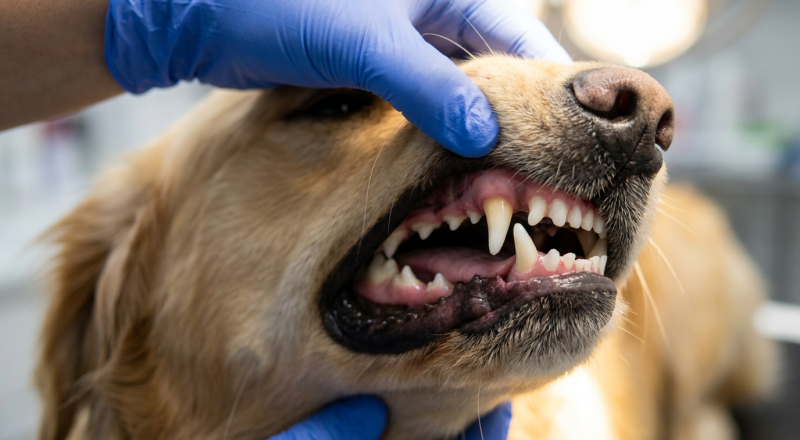
A dog dental chart records 42 adult teeth, and each one carries a three-digit number from the modified Triadan system instead of a name. The first digit is the quadrant and the last two give the tooth’s position counting from the midline, so 104 is the upper right canine and 409 is the lower right first molar.
Read the code and the discharge sheet your vet hands you becomes a map of your dog’s mouth. This page is general information, not veterinary advice.
Why a dog chart has 42 teeth and a puppy chart 28
Adult dogs carry 20 teeth in the upper jaw and 22 in the lower, because each side of the lower jaw has a third molar the upper jaw lacks. Puppies erupt 28 deciduous teeth with no baby molars and no baby first premolar, which is why the puppy chart has gaps built in.
The Merck Veterinary Manual puts the first deciduous teeth at 3 to 5 weeks of age and the full adult set in place by about 7 months. The timing of the swap is covered in our guide to when puppies lose their baby teeth.
How the Triadan quadrants work
The mouth splits into four quadrants numbered clockwise as the vet faces the dog: 100 for upper right, 200 for upper left, 300 for lower left and 400 for lower right. Deciduous teeth use the same layout shifted by 400, so the puppy quadrants run 500 to 800.
Within each quadrant the count starts at the midline. Positions 01 to 03 are incisors, 04 is the canine, 05 to 08 are premolars and 09 onward are molars. The canine is always 04 and the first molar is always 09.
Video: Kendra the Vet Tech
The American Veterinary Dental College publishes the full dog and cat Triadan tables, based on Floyd’s 1991 paper. The same rules give cats a 30-tooth chart with built-in gaps, explained in our cat dental chart guide.
Dog tooth numbers and eruption ages by tooth type
Counts and positions below come from the AVDC Triadan tables. Eruption ages are the dog column of the Merck eruption table, which Merck labels average data subject to considerable variation.
| Tooth type | Per quadrant (upper / lower) | Adult positions in each quadrant | Puppy positions (500 to 800 series) | Adult eruption age (Merck Veterinary Manual) |
|---|---|---|---|---|
| Incisors | 3 / 3 | 01 to 03 | 01 to 03 | 4 to 5 months |
| Canine | 1 / 1 | 04 | 04 | 5 to 6 months |
| Premolars | 4 / 4 | 05 to 08 | 06 to 08 (no puppy first premolar) | 4 to 6 months |
| Molars | 2 / 3 | 09 to 10 upper, 09 to 11 lower | none | 4 to 7 months |
| Whole mouth | 10 / 11 per side | 42 adult teeth | 28 puppy teeth | full adult set by about 7 months |
What the marks on the chart mean
Numbers locate the tooth; symbols record its condition. Vets chart pocket depth in millimeters, gum recession, mobility, fractures and missing teeth. A missing tooth keeps its Triadan number; the row is never renumbered.
The carnassials draw the most attention. The upper fourth premolar (108 and 208) and the lower first molar (309 and 409) are the big shearing pair and do the heavy chewing.
Using the chart at home
You will not probe pockets at home, but the chart tells you where to look. If the summary flags tooth 208, you know to lift the upper left lip and check the large tooth behind the canine for redness or plaque.
Chart findings also set your brushing priorities. The cheek-side surfaces of the upper premolars and molars are the usual plaque hotspots, and reaching them is what our guide on how often to brush your dog’s teeth is built around.
Ask for a copy of the chart after every cleaning. Comparing pocket depths on the same Triadan number across visits is how progress gets measured.