Cat dental chart: how vets number and track feline teeth
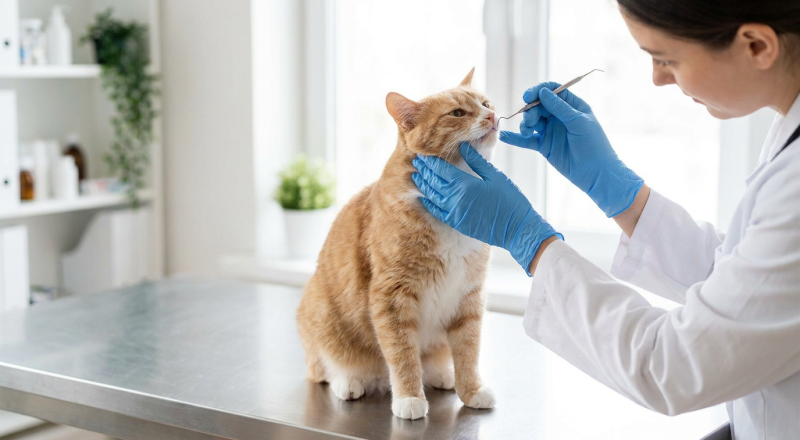
A cat dental chart records 30 teeth, and each one carries a three-digit Triadan number rather than the name you would use at home. The system is the working language of veterinary dentistry, and once you can read the rows, the chart your vet hands you stops being decoration.
The part that trips up most owners comes first.
Why a cat chart shows 30 teeth, not 42
Dogs have 42 adult teeth; cats have 30, and the missing twelve are easy to name. Cats carry no teeth in the positions dogs use as first and second premolars along the cheek row, and they hold a single upper and lower molar pair per side for shearing rather than grinding. A dog’s rows are built for crushing; a cat’s are built for cutting meat off a carcass, and the count reflects it.
How Triadan numbering works
Each number is three digits: quadrant first, then the tooth’s position counting from the midline. The quadrants run 1 for the upper right, 2 for upper left, 3 for lower left, 4 for lower right, with 5 through 8 reserved for baby teeth in the same layout. So 108 reads as upper right, eighth tooth from the front.
| Tooth | Triadan numbers | Count in a cat |
|---|---|---|
| Upper canines | 104, 204 | 2 |
| Lower canines | 304, 404 | 2 |
| Upper shearing premolars | 108, 208 | 2 |
| Carnassial molars | 309, 409 | 2 |
| Full adult dentition | 101 through 411 | 30 |
Video: Kendra the Vet Tech
Veterinary references generally credit the modified Triadan system to Dr. Michael Triadan, a Swiss dentist, and it became the standard because tooth names differ between species while numbers do not. One chart layout covers dogs, cats, and ferrets alike.
Reading the symbols
Charts do not just number teeth; they record what each exam found. A circle can mean healthy, shading can mean missing, and arrows or abbreviations note mobility, fracture, or resorption. Feline tooth resorption lesions are common, painful, and often start at the gumline where only probing or radiographs catch them, which is one reason a paper chart alone cannot rule problems out.
General information only; your vet’s exam and imaging are what diagnose your cat. Early signs owners can watch for at home are covered in our guide on dental disease in cats.
Why the chart matters to you
The numbering turns recommendations into specifics. When a discharge summary advises monitoring tooth 108, you know it is the upper shearing premolar, and recheck notes compare like with like across visits. The same record-keeping logic is why daily prevention beats episodic cleanings, the argument in our guide to brushing a cat’s teeth, and why our overview of dental care for cats and dogs keeps both species on one calendar.