Burst toothbrush: what the sonic brush specs actually mean
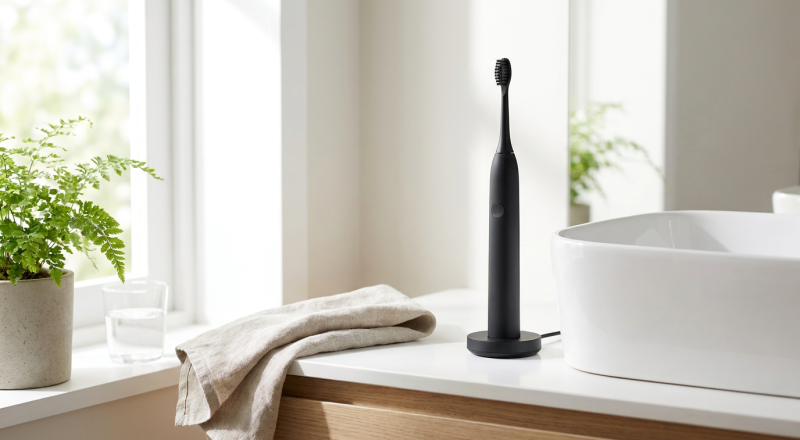
The Burst Pro 2.0 sonic toothbrush is a subscription-first brush sold mainly through the brand’s own store, and its headline specs, the 9-month battery, five modes, and up to 10x plaque removal claim, all come from Burst’s product page rather than independent testing. That shapes how much weight each number deserves. Here is what every spec means, and what the listing leaves out.
The specs, sourced
According to the Burst product listing, the Pro 2.0 ships with soft tapered bristles, a real-time pressure sensor, a 2-minute timer, an LED display, a magnetic wall mount, and USB-C charging. The clinically worded claims carry a footnote: measured against a manual brush, twice daily, whitening mode, over 30 days, with the supporting data on file at Burst (burstoralcare.com/clinical) rather than published as an independent paper.
| Spec (manufacturer listing) | Burst Pro 2.0 |
|---|---|
| Brushing modes | 5, shown on an LED display |
| Battery life | Up to 9 months per charge |
| Timer | 2 minutes |
| Pressure sensor | Yes, real-time feedback |
| Street price (Burst store) | USD 84.98 subscribed, USD 120.99 one-time |
| Refill plan | USD 14 for 2 replacement heads |
One figure you will not find: a vibrations-per-minute count. The current listing describes enhanced vibration control without publishing a number, so any specific count quoted elsewhere is not coming from the manufacturer’s page.
How the claims read in context
Video: BURST Oral Care
Sonic means the head oscillates fast enough to drive fluid past the bristle tips, and the general powered-versus-manual picture is covered in our manual vs electric toothbrush comparison. Note the baseline Burst measures against: a manual brush. Comparisons against other powered brushes do not appear on the listing. And whitening mode is not a substitute for chemistry, since surface stain removal is still the paste’s job, as our best whitening toothpaste guide explains.
This is general information, not dental advice. For bleeding gums, recession, or sensitivity, a dentist who can see your teeth beats any spec sheet.
What the spec sheet skips
Battery life is the standout: nine months per charge is genuinely long for the category, and it is the claim least dependent on marketing framing. The weak point is the subscription economics. Cancel it and you keep the brush, but heads wear out; the refill plan defaults to replacement every 12 weeks, and splayed bristles clean worse no matter how good the motor is. The swap-interval reasoning is in our how often to replace your toothbrush guide, and third-party heads exist but fit and bristle quality vary.