How Much Toothpaste Should Kids Actually Use?
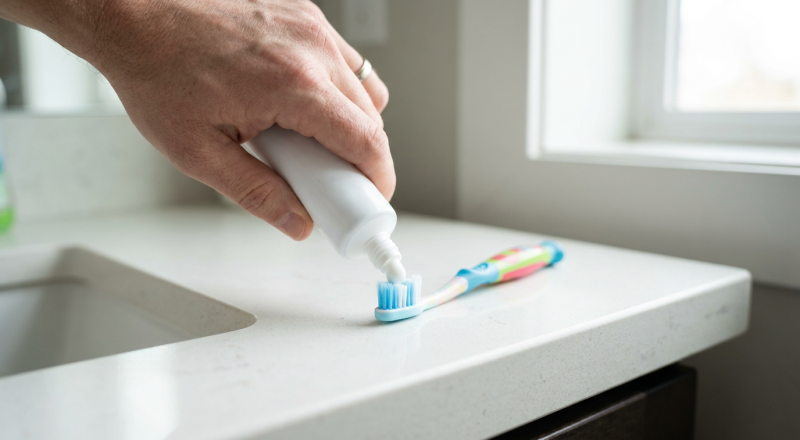
A child under 3 needs a rice-grain smear of toothpaste. From age 3 to 6, a pea-sized amount twice a day with an adult supervising is the guidance from the American Dental Association and the American Academy of Pediatrics.
Nearly every parent uses more than that, because the amount shown in toothpaste advertising is closer to a full brush head.
What a Rice Grain and a Pea Look Like
A smear is a thin film you can barely see across the bristle tips. A pea is roughly 0.25 grams, which covers about a third of a child-size brush head.
Squeeze it yourself until your child is around 6. Handing over the tube reliably produces a full stripe.
Why the Amount Matters
The limit exists because young children swallow much of what goes into their mouth. Regularly swallowing fluoride toothpaste during the years permanent teeth are forming is associated with dental fluorosis, which typically appears as faint white flecks or streaks in the enamel.
Most fluorosis linked to toothpaste is mild and cosmetic. The dose control is still the reason the guidance is specific rather than approximate.
The other side of the ledger matters just as much. Cutting fluoride entirely to avoid swallowing it trades one risk for a larger one, since fluoride toothpaste has strong evidence behind cavity reduction. If you are weighing that choice, the research summary on whether fluoride-free toothpaste is better for kids is worth reading before you switch.
Spit, Do Not Rinse
Teach spitting as soon as your child can manage it, usually around age 3. Then skip the water.
Rinsing washes away fluoride that would otherwise sit on the enamel and keep working. A quick spit leaves a thin protective film behind.
Before the First Tooth and Just After
Wipe the gums with a damp cloth before any teeth arrive. Once the first tooth breaks through, move to a soft infant brush and the rice-grain smear.
Parents who want to skip fluoride at this stage often reach for hydroxyapatite instead. What to look for is covered in safe toothpaste for babies and toddlers, including which flavoring agents cause the most refusals.
When They Swallow It Anyway
A swallowed pea-sized amount of standard toothpaste is not an emergency. At typical concentrations it works out to a fraction of a milligram of fluoride.
Eating a meaningful portion of a tube is different, and that is a call to poison control. Store toothpaste out of reach for the same reason you store vitamins there.
Picking a Paste They Will Use Twice a Day
Compliance beats formulation. A child who brushes twice daily with a paste they tolerate does better than one who fights a tube they dislike every night.
Flavor and foaming level drive most of that, and the comparison in best kids fluoride-free toothpaste sorts options by what children actually accept.
Ask your child’s dentist about fluoride if your water supply is unfluoridated or your child has already had cavities. General guidance is a floor, not a personalized plan.