When Do Babies Need Their First Toothpaste?
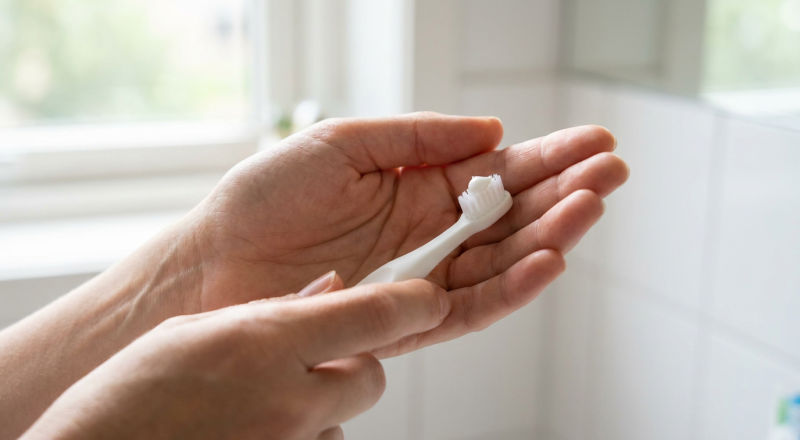
The first tooth is the signal. Current guidance from major dental and pediatric groups is to start brushing with a rice-grain smear of toothpaste as soon as a tooth breaks through, which for most babies lands somewhere around six months.
Before that tooth arrives, no toothpaste is needed at all.
How much, by age
From the first tooth to age three, use a smear the size of a grain of rice. That is deliberately tiny, because babies swallow most of what you put in their mouth.
From three to six, move to a pea-sized amount and start coaching the spit.
After six, a normal pea works, though most kids still need supervision on how long they actually brush.
Before the first tooth
Wipe the gums with a clean damp cloth or a soft finger brush once a day, usually after the evening feed.
It does two things. It clears milk residue, and it makes mouth-touching a normal part of the day so the toothbrush is not a shock later.
Fluoride or fluoride-free
This is the part parents get stuck on, and the honest answer is that it depends on cavity risk. Fluoride has the deepest evidence base for preventing decay, and the reason for the rice-grain limit is to keep swallowed amounts low.
Hydroxyapatite is the main fluoride-free option parents ask about and it is designed to be swallow-tolerant. We lay out the tradeoff in is fluoride-free toothpaste better for kids.
Either way, avoid adult whitening pastes and anything with a high abrasive rating. Safe toothpaste for babies and toddlers covers which ingredients to skip entirely.
Making it actually happen
Twice a day, and the bedtime brush is the one that counts most, since saliva flow drops overnight.
Sit the baby in your lap facing away, tilt the head back against your chest, and brush from behind. You get a clear view and better control than fighting them face to face.
Use a brush with a small head and soft bristles, and replace it every three months.
When to bring in a dentist
Common guidance is a first dental visit by the first birthday, or within six months of the first tooth.
Go sooner if you see white chalky patches or brown spots near the gumline, which can mean early decay. Your dentist can also tell you whether your water supply is fluoridated, which changes the calculation. If you are comparing products, start with our best kids toothpaste picks.