Mouthwash spray: how the portable format compares to rinses
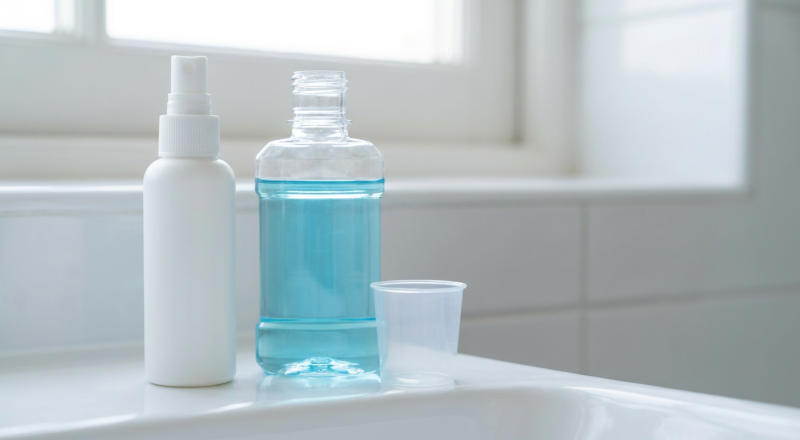
A mouthwash spray is a breath freshener, not a pocket-sized rinse. It puts a small mist on your tongue and inside your cheeks, and most sprays carry no swish time at all. A poured rinse is labeled for a set dose held in your mouth for 30 to 90 seconds, depending on the product. That contact time is the whole difference.
So the short answer: carry a spray for the hour before a meeting. Keep the bottled rinse for the routine it was designed for.
What the label on each format asks you to do
Rinse labels are specific. They give a dose in milliliters and a time in seconds, because the active ingredient needs that window to reach the surfaces it is meant to treat.
Spray labels usually read “as needed.” Nothing tells you to hold it, and nothing says how long the mist stays in contact before you swallow or talk.
Video: My Private Dentist
| Product | Format | Labeled dose | Labeled contact time | Source |
|---|---|---|---|---|
| Listerine Cool Mint Antiseptic | Bottled rinse | 20 mL, morning and night | 30 seconds | DailyMed Drug Facts label |
| Chlorhexidine gluconate 0.12% | Prescription rinse | 15 mL, after breakfast and before bed | 30 seconds | DailyMed label |
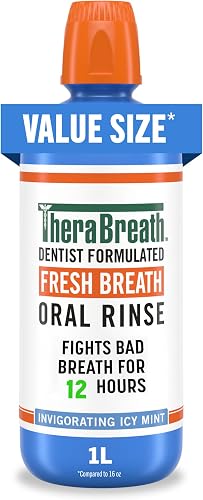
| TheraBreath Fresh Breath Oral Rinse | Bottled rinse | 10 mL, twice daily (adults) | 90 seconds, then wait 5 minutes to eat | therabreath.com product directions |
| Biotene Moisturizing Spray | Mouth spray, 1.5 fl oz | Spray onto tongue and spread, as required | None stated; relief claimed for up to 4 hours | CVS listing, manufacturer copy ($6.33 per oz street price) |
Enamelly earns a commission on qualifying Amazon purchases made through these links, at no extra cost to you.

Does a spray still kill odor-causing bacteria
Some sprays advertise germ-kill claims on the package. Treat those as manufacturer claims, since the spray is tested under its own conditions, not under the 30-second swish a rinse label requires.
What a spray reliably does is mask odor and wet a dry mouth for a while. If your breath problem comes from coating on the back of the tongue, a spray just sits on top of it. A scraper removes it, which is why the tongue scraper vs toothbrush question matters more than which mint you carry.
Who gets the most from each format
- Spray: commuters, people talking all day, anyone with dry mouth who needs moisture more than antiseptic action.
- Bottled rinse: anyone following a dentist’s plan for gum inflammation, or using a fluoride rinse on purpose.
- Neither alone: a persistent coated or white tongue. Read up on white tongue causes before you buy another bottle, and see a dentist if it lasts.
Timing it with your toothpaste
Rinsing right after brushing can wash away what your toothpaste just left behind. That is the concern behind asking does mouthwash undo hydroxyapatite toothpaste, and it applies to a heavy spray habit too.
A simple order works for most people: brush, spit, skip the water rinse, and use your bottled rinse at a different time of day. Save the spray for midday.
A spray adds almost nothing to your routine. It still cannot stand in for a rinse your dentist asked you to hold for a set time.
General information, not dental or medical advice. Follow the label on your product and the guidance of your dentist.