Cat dental sticks: what they actually clean and what they miss
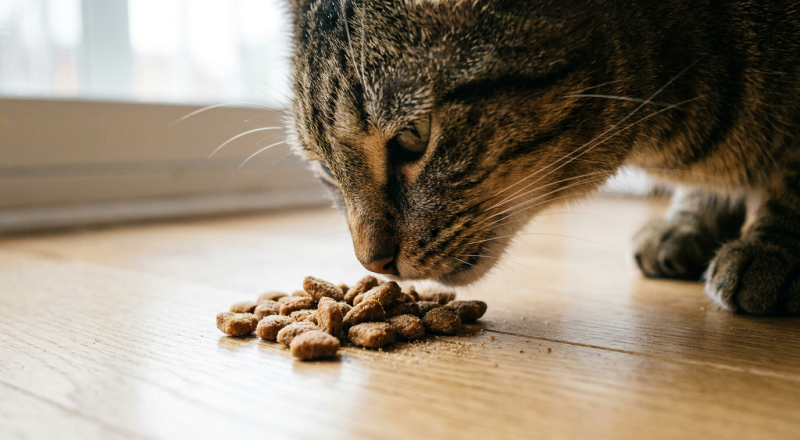
Cat dental sticks and crunchy dental treats can slow tartar on the outer crowns of the back teeth, and only a handful have independent trial data showing it. They do not clean below the gumline, they do not treat existing disease, and they are no substitute for brushing.
Where the tartar percentages actually come from
Most listings quote a reduction figure with no source. The closest thing to a public standard is the Veterinary Oral Health Council (VOHC) Seal of Acceptance, which requires the maker to fund two separate trials run to VOHC protocols.
To pass, the product must cut plaque or tartar by at least 15% in each trial and by a mean of 20% across both, compared with cats fed the same dry diet without the product. Each trial runs a minimum of 28 days.
Video: Pet Circle
So a seal tells you the product beat a control group by a defined margin. A bare percentage on a bag tells you nothing about how it was measured.
VOHC-accepted dental treats for cats
These are the cat chew treats on the VOHC list as of its August 2026 update. Most are accepted for tartar only.
| Treat | Company | VOHC claim | Seal awarded |
|---|---|---|---|
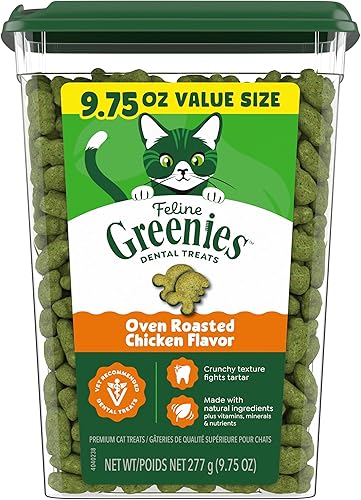
| Feline Greenies Dental Treats | Nutro/Greenies Company | Tartar | 2005 |
| Purina DentaLife Daily Oral Care Cat Treats | Nestle Purina PetCare | Tartar | 2016 |
| Whiskas Dentabites (chicken, salmon) | Whiskas | Tartar | 2017 |
| Purina Pro Plan Veterinary Diets Dental Bites | Nestle Purina PetCare | Plaque and tartar | 2019 |
Source: vohc.org accepted products list, cat edible chew treats section.
Enamelly earns a commission on qualifying Amazon purchases made through these links, at no extra cost to you.


What the trials measure, and what they miss
VOHC scores seven cat teeth: the upper canine and third and fourth premolars, plus the lower canine, third and fourth premolars and first molar. Scorers grade the visible crown. The incisors are not scored, and nothing below the gumline is part of the result.
Periodontal disease starts under the gum, where no chew reaches. A crown can look cleaner while bacteria keep working in the pocket beneath it.
The trials also exclude cats with severe gum inflammation, loose teeth, deep attachment loss or tooth resorption at the gumline. The results describe healthy mouths, which may not be your cat’s mouth.
Which cats can safely chew them
A crunchy treat scrapes as the tooth sinks in, so it only helps a cat that bites down instead of swallowing pieces whole.
- Good fit: an adult cat with a comfortable mouth that crunches kibble normally.
- Talk to your vet first: a cat that drops food, chews on one side, drools or paws at its face. Those are pain signs, and a hard treat can make them worse.
- Skip hard textures: cats with known resorptive lesions or recent extractions, until your vet clears it.
Even for a good chewer, a treat works best next to brushing with a cat toothpaste made for feline mouths.
Where dental sticks fit in a routine
Treat them as an add-on. Daily brushing has the strongest support, because bristles reach the gumline and a treat does not.
Use a paste made for pets. Human paste is the wrong choice, and our breakdown of cat toothpaste vs dog toothpaste explains why species-specific formulas exist.
If brushing is a fight, an enzyme paste you smear on the teeth is a middle step. The trade-offs are covered in enzymatic vs non-enzymatic pet toothpaste.
Treats add calories, so follow the pack’s feeding amount and trim meals if your cat gains weight.
This is general information, not veterinary advice. Your vet can tell you whether a treat suits your cat’s teeth.