My Kid Swallowed Toothpaste: Should You Worry?
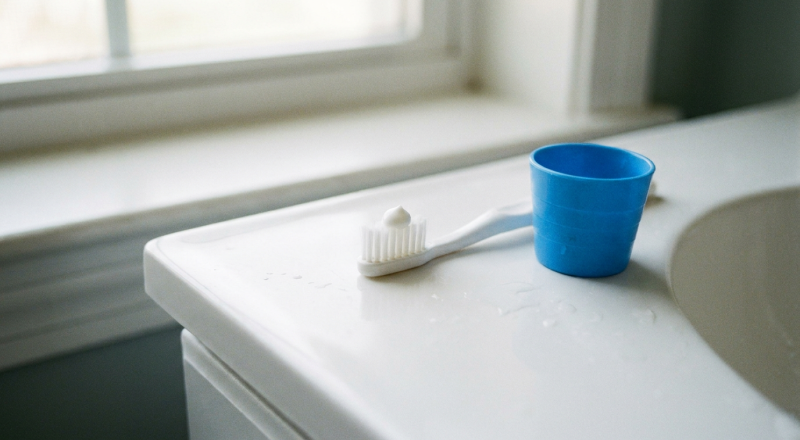
A pea-sized amount of toothpaste swallowed during brushing is not an emergency. Kids do it constantly, especially under age six, and the usual outcome is nothing at all. What deserves a phone call is a large amount eaten off the tube, and that distinction comes down to simple arithmetic.
This is general information rather than advice about your specific child. If you are unsure how much went down, call Poison Control at 1-800-222-1222 in the US. They answer around the clock and the call is free.
The amounts that actually matter
Standard family toothpaste carries 1000 to 1500 ppm fluoride according to label figures, which works out to roughly 1 to 1.5 mg of fluoride per gram of paste. A pea-sized blob is about a quarter of a gram, so a swallowed pea delivers well under half a milligram.
Clinical references commonly treat about 5 mg of fluoride per kilogram of body weight as the point where symptoms become likely. For a 15 kg toddler that is around 75 mg, which means eating a substantial share of a family-sized tube in one go.
A child who eats that much usually vomits before anything else happens, because fluoride irritates the stomach lining. Nausea, stomach ache, and vomiting are the early signals, and they show up within a few hours.
What to do right now
- Small swallow during brushing: nothing needed, carry on
- A few brushfuls: give milk or a calcium-rich snack, which binds some of the fluoride
- Most of a tube, or any vomiting: call Poison Control before doing anything else
- Do not induce vomiting unless a professional tells you to
Fluoride-free pastes remove the fluoride question entirely, though they are still not food. Hydroxyapatite versions are the mildest option on this front, and whether hydroxyapatite toothpaste is safe to swallow covers what the ingredient does in the gut.
The real risk is habit, not one incident
Single swallows are a non-event. Swallowing fluoride toothpaste daily for years while permanent teeth are still forming, roughly birth to age eight, is what raises the chance of dental fluorosis: faint white flecks or mottling on the enamel surface.
Fluorosis at that level is cosmetic and mild. It is still worth avoiding, and the fix is boring: control the dose on the brush rather than policing the rinse. How much toothpaste kids should use gives the amounts by age.
How to stop it happening
Sweet fruit flavors are the main driver. Kids who like the taste swallow more, so a plainer mint or unflavored paste often solves the problem in a week.
Store the tube out of reach rather than on the sink edge, dispense it yourself until around age six, and teach spitting before you teach rinsing. If you are choosing a first paste for a toddler, start with safe toothpaste for babies and toddlers and match the amount to the age.