Why You Should Never Use Human Toothpaste on Pets
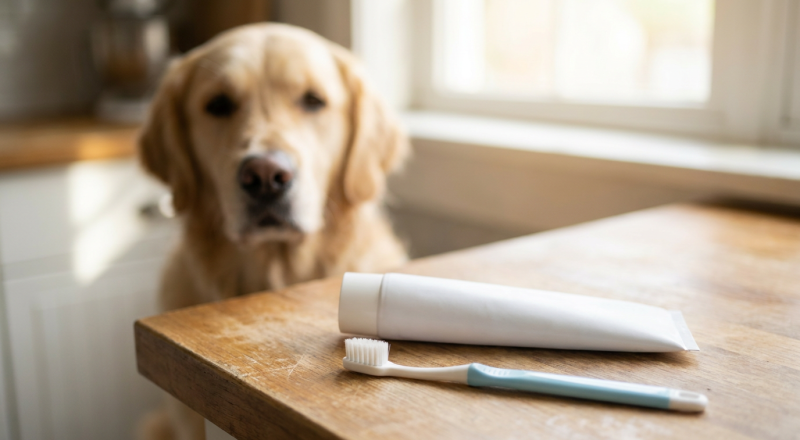
Human toothpaste is built around one assumption your pet cannot meet: that you will spit it out. Using human toothpaste on dogs and cats means they swallow the whole ribbon, and a few ordinary ingredients turn that into a genuine problem rather than a minor one.
Xylitol is the ingredient that sends dogs to the vet
Xylitol is a sugar alcohol used as a sweetener in plenty of toothpastes, and it is dangerous to dogs. Small amounts can trigger a rapid insulin release and a steep drop in blood sugar, with liver injury reported at higher doses.
The FDA has published a consumer warning on xylitol and dogs for exactly this reason. Read the label for xylitol, birch sugar, or E967, since it appears under several names.
Cats appear far less sensitive to it. That is still no argument for handing them a tube designed for a human mouth.
Fluoride was never meant to be swallowed nightly
Fluoride does its work topically, while it sits on the tooth surface. Adult toothpaste carries it at a concentration set for someone who rinses and spits.
A ten pound cat swallowing a strip of that every evening is a completely different exposure picture. It is why veterinary pet pastes are fluoride-free across the board.
Foaming agents upset the stomach
Detergents such as sodium lauryl sulfate create the lather you expect when you brush. Swallowed, they commonly cause drooling, nausea, and loose stool.
Baking soda formulas add a second issue, a sodium load a small animal has no reason to be drinking. Pet pastes are deliberately non-foaming so your pet can keep swallowing without distress.
What to use instead
Buy a paste made for the species, in a flavor your pet will actually tolerate. Poultry and malt suit most dogs, fish or mild poultry most cats.
Enzyme systems do the real work once flavor is sorted, so it pays to understand enzymatic vs non-enzymatic pet toothpaste before you compare tubes. A shortlist of best dog toothpaste picks narrows it from there.
Technique still outranks the tube. A calm, repeatable routine for how to brush a dog’s teeth beats a premium paste your dog wrestles you over twice a month.
If your pet already got into your toothpaste
Check the ingredient panel first and look for xylitol. If it is listed and your dog swallowed any, call your veterinarian or a pet poison control line straight away, since signs of low blood sugar can show up within about 30 minutes.
With no xylitol on the label, a small lick usually means drooling or a briefly unsettled stomach. Keep an eye on your pet and call your vet if anything persists.