Mouthwash dispenser: what to check before you buy one
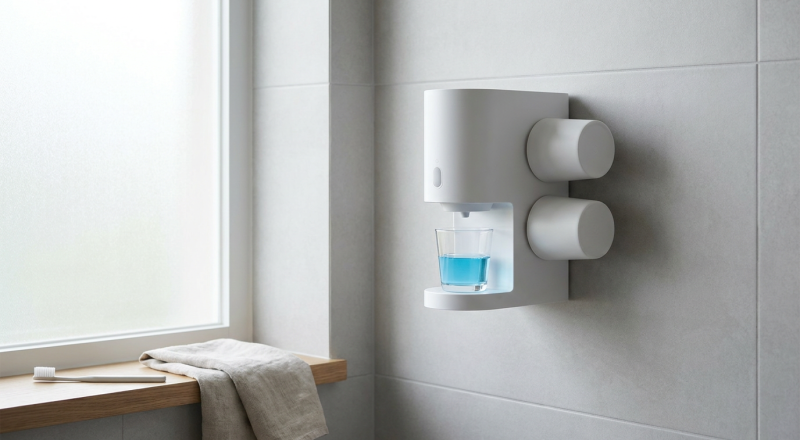
A good mouthwash dispenser does one thing well: it pours the dose printed on your rinse label, every time, into a cup that belongs to one person. Check three things before you buy: that the dose settings match your rinse, that the tank holds enough for your household, and how the cups are handled.
Spec sheets list capacity and colors. They rarely tell you whether the unit fits the way you actually rinse.
Match the dose settings to your rinse label
Rinses do not share one dose. Listerine tells you to pour 20 mL, about 4 teaspoons, and swish for 30 seconds. The ACT Anticavity fluoride rinse label on DailyMed calls for 10 mL swished for 1 minute.
That is why the 10, 20, and 30 mL settings on many dispensers matter more than the finish. If your rinse is not one of those amounts, measure one pour into a marked cup before trusting the setting.
Video: Product Demo Lab
One more label check: if your rinse is a concentrate that must be diluted, a dispenser pours it neat. It will not mix water in for you, so a measuring cap still does that job better.
Capacity and refill frequency
Capacity only means something next to your daily use. The table uses listed manufacturer figures and simple arithmetic at a 20 mL dose.
| Listing | Capacity (manufacturer) | Dose settings | Power | 20 mL doses per fill |
|---|---|---|---|---|
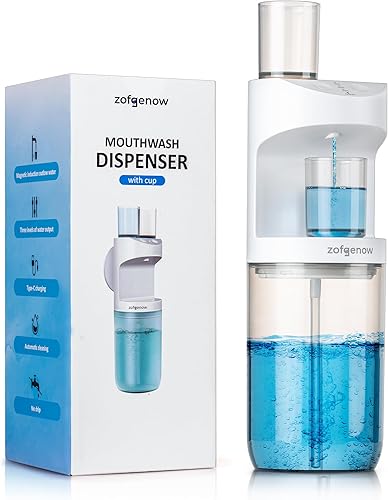
| ZOFGENOW wall-mounted, 17.6 oz (Amazon) | 17.6 fl oz, about 520 mL | 10 / 20 / 30 mL | Rechargeable, USB to Type-C cable | About 26 |
| ZOFGENOW touchless, 19.4 oz (Amazon) | 19.4 fl oz, about 574 mL | 10 / 20 / 30 mL | Rechargeable | About 28 |
| Touchless wall-mounted, 700 mL (retailer listing) | 700 mL, about 23.7 fl oz | 3 levels | 3 AAA batteries | About 35 |
Run your own numbers. Two adults rinsing twice a day at 20 mL use 80 mL daily, so a 17.6 oz tank needs refilling about once a week. A 1 L bottle of rinse covers roughly two fills of that tank.
A larger tank means fewer refills but a longer wait before the liquid is used up. A wide fill opening makes refilling from a big bottle less messy.
Enamelly earns a commission on qualifying Amazon purchases made through these links, at no extra cost to you.

Shared cups in a multi-person bathroom
Most units ship with two or three magnetic cups, and they tend to get passed around. Give each person a cup in their own color, rinse it after use, and let it dry upside down on the magnet.
The cup gets the same thinking as your brush. The logic behind how often to replace your toothbrush applies here too: replace a cup that cracks or clouds instead of scrubbing it forever.
Where a dispenser fits in your routine
A dispenser changes convenience, not what the rinse does. If you use a hydroxyapatite paste, timing still matters, and the question of whether mouthwash undoes hydroxyapatite toothpaste is worth reading before you set a routine.
If fresh breath is the real goal, a rinse is only one tool. Comparing a tongue scraper versus a toothbrush for breath may point you somewhere more useful than a bigger tank.
This is general product information, not dental advice. For kids, check the rinse label for age limits and supervise the pour.