Invisible braces aligners: how the clear tray types differ
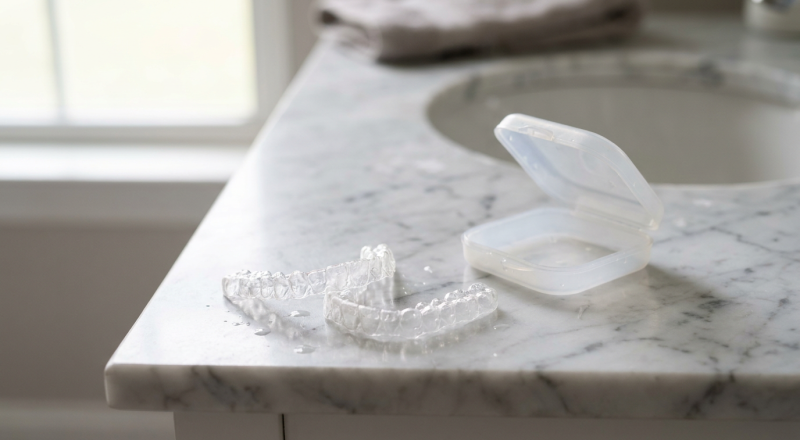
Invisible braces aligners describes two different products, and the difference decides your price, your daily routine and who supervises you. Clear aligners are removable plastic trays you swap on a schedule. Ceramic and lingual braces are fixed brackets glued to your teeth, just harder to spot.
Clear aligners split again: trays prescribed and checked by an orthodontist in person, and at-home kits planned from impressions with remote check-ins. This page is general information, not dental advice.
Removable trays versus bonded brackets
A clear aligner only moves teeth while it is in your mouth. Invisalign’s own FAQ says people typically wear its aligners 20 to 22 hours a day, taking them out to eat, drink anything but water and brush.
That freedom is also the most common way treatment slips. Leave the trays in a drawer after lunch and the schedule falls behind, while bonded brackets keep working whether you remember them or not.
Video: Doctor O’Donovan
Ceramic braces use tooth-colored brackets on the front of your teeth. Lingual braces put custom brackets on the back, so nothing shows when you smile, and that custom lab work puts them at the top of the price range.
Published price bands by tray and bracket type
No single price list exists, so each figure below comes from a named source. Your own quote can land outside every one of them.
| Type | How it attaches | Published figure | Named source |
|---|---|---|---|
| In-office clear aligners (Invisalign) | Removable trays, typically worn 20 to 22 hours a day | $5,490 to $7,000 doctor’s fee in patient examples | Invisalign.com cost page and FAQ |
| At-home clear aligners (SmileSet) | Removable trays, no office visits required | $995, 4 to 6 month treatment time | SmileSet.com comparison chart |
| Ceramic braces | Tooth-colored brackets bonded to the front of the teeth | $4,000 to $8,500 | Brunswick Valley Orthodontics 2026 pricing guide |
| Lingual braces | Custom brackets bonded to the back of the teeth | $8,000 to $13,000 | Brunswick Valley Orthodontics 2026 pricing guide |
Our braces cost guide breaks down the fixed-bracket numbers further, including how lifetime orthodontic insurance maximums apply. For the tray side, the published Invisalign cost ranges explain what the doctor’s fee usually covers, such as the full aligner series and final retainers.
What happened to the at-home aligner brands
If you researched this a few years ago, two of the best-known names are gone. Byte’s website now states that it has concluded its operations, and the SmileDirectClub domain redirects to SmileSet, which says it acquired SDC’s technology and assets.
SmileSet lists its aligner treatment at $995 with no office visits required and a 4 to 6 month timeline, by its own comparison chart. The lower price buys a narrower service: no chairside exam before treatment and no in-person adjustments during it.
Whether that trade suits you depends on your teeth. Mild spacing or crowding is what at-home kits are marketed for, while bite problems, gum disease or missing teeth are good reasons to see an orthodontist first.
Choosing a category for your own case
Start with the question most ranking pages skip: can you keep a removable tray in most of the day, every day? If you doubt it, ceramic or lingual braces take that variable away.
Next, get an in-person exam even if you lean toward trays. X-rays can show bone and root issues that a mail-in impression cannot, and an orthodontist can tell you whether your case is simple enough for aligners at all.
Then budget for what sits around treatment. Retainers are a long-term habit after any of these options, and if your dentist has flagged wisdom teeth for removal, our wisdom teeth removal cost guide covers what that adds before or after orthodontic work.