Mouthwash concentrate: how the diluted format actually works
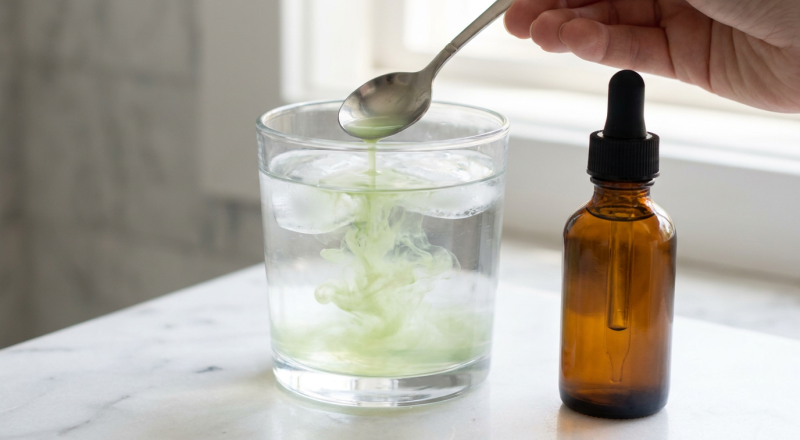
A mouthwash concentrate is a rinse sold at several times its use strength, and you add the water yourself. The label ratio is the formula. Mix it as directed and you get the rinse the maker designed; drift far off that ratio and you are using a different product.
That sounds obvious, but ratios across the category are nowhere near uniform. One brand wants 1 part to 4 parts water, another wants a few drops in half a glass. Moving between brands on habit is how people end up with a rinse that is too weak or harsh enough to sting.
How the diluted format works
The maker ships the flavour, surfactants and any active ingredient in a small volume, usually a 2 oz to 50 ml bottle. You rebuild the finished rinse at home, either one dose at a time in a cup or as a full batch in a larger bottle.
The appeal is less plastic and less shipped water. The tradeoff is that you now control the dose, and nothing in the bottle warns you if you get it wrong.
Video: Canary
Published dilution ratios by brand
These are the manufacturer or retailer directions as printed. Check your own label, since formulas and instructions change between markets.
| Product | Published directions | Approximate ratio | Source |
|---|---|---|---|
| Marvis Strong Mint Mouthwash | 1 part mouthwash in 4 parts water, rinse at least 30 seconds | 1:4 | marvis.com (North America) |
| Marvis Spearmint Mouthwash | 1 part mouthwash in 3 parts water | 1:3 | marvis.com |
| Dr. Keightley’s No. 117 (C.O. Bigelow) | 1 teaspoon in 2 ounces of water | about 1:12 | bigelowchemists.com |
| Canary Peppermint Concentrate | 2 oz concentrate in 14 to 16 oz cold filtered water | about 1:7 to 1:8 | canarycleanco.com FAQ |
| Weleda Ratanhia Mouthwash | 5 to 10 drops in half a glass of lukewarm water | drops per glass | weleda.com.au |
| Chlorhexidine rinse (contrast) | Use full strength, do not mix with water | not a concentrate | Mayo Clinic, NHS |
Enamelly earns a commission on qualifying Amazon purchases made through these links, at no extra cost to you.

What happens when the ratio is off
Too much water and you mostly lose flavour and the fresh feeling. Whether any active ingredient still works at that strength is something the maker has not published, so you have no evidence either way. Treat the label ratio as the upper limit on how much you dilute.
Too little water gives you a stronger rinse than intended. With essential oils or high mint loads that can mean burning or irritation, especially if your gums are already tender. If you have that problem, a routine built around toothpaste for sensitive teeth and gums is a better place to start than a stronger rinse.
The bigger mistake is diluting a rinse that was never meant to be diluted. Mayo Clinic and the NHS both say chlorhexidine is used at full strength, and Listerine tells you not to dilute its antiseptic rinse. Watering those down turns a tested dose into an untested one.
Getting a consistent mix
- Measure with a teaspoon or a marked cup instead of pouring by eye.
- If you batch-mix, use a clean bottle you can mark at the fill line.
- Stick with one brand’s ratio instead of reusing another brand’s habit.
- Rinse for the time on the label, commonly 30 seconds, then spit.
Timing matters too. If you brush with a remineralising paste, it is worth reading whether mouthwash undoes hydroxyapatite toothpaste before you rinse straight after. And if fresh breath is the whole goal, a tongue scraper vs toothbrush for breath comparison may do more than any rinse.
This is general information, not dental advice. If a dentist prescribed a rinse, follow their directions over any label.