Retainer cleaner pod: what the effervescent tablets actually remove
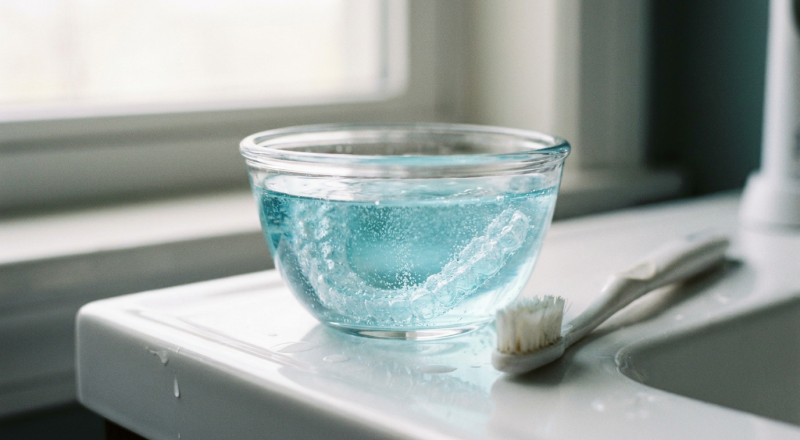
A retainer cleaner pod mostly removes the soft layer on your retainer: bacteria, the sticky plaque film they form, odor and surface stains. It is not built to dissolve hardened tartar, and none of the major labels claim it does.
That is why orthodontists treat the pod as a weekly add-on to brushing, not a replacement. This page is general information, not dental advice.
What the fizz is actually doing
Most pods are oxygen-releasing tablets. Retainer Brite lists potassium persulfate compound and sodium perborate first, and Haleon names potassium monopersulfate, TAED and sodium percarbonate as the cleaning agents in Polident.
Those compounds release active oxygen in warm water. The bubbles loosen organic film, kill odor-causing bacteria and lift stains from tea or coffee.
Video: Pure Orthodontics
Invisalign Cleaning Crystals work differently. The ingredient list leads with sodium sulfate and sodium carbonate, with sodium dichloroisocyanurate, a chlorine-releasing sanitizer, plus a detergent.
Protein film versus mineral buildup
Plaque on a retainer starts as a biofilm of bacteria and saliva proteins. A soak handles that well, especially when the film is fresh.
Left for days, plaque hardens into tartar. The American Association of Orthodontists describes tartar as far more difficult to remove, and the pod labels below promise plaque, stain and odor control, never tartar removal.
If you see a white, chalky crust that a soak leaves behind, that is the mineral layer. Ask your orthodontist before scraping it, because scratches give bacteria new places to settle.
Labeled soak times, side by side
| Product or source | Format | Listed cleaning agents | Labeled soak | Source |
|---|---|---|---|---|
| Retainer Brite (Dentsply Sirona) | Effervescent tablet | Potassium persulfate compound, sodium perborate | 15 minutes | Product directions and ingredient sheet; SDS lists persulfates as a known allergen |
| Polident 3 Minute | Effervescent tablet | Potassium monopersulfate, TAED, sodium percarbonate | 3 minutes, then brush and rinse | polident.com, haleonhealthpartner.com |
| Invisalign Cleaning Crystals | Crystal packet | Sodium dichloroisocyanurate, sodium tripolyphosphate, sodium lauryl sulfate | 15 minutes in about 100 ml warm water | shop.invisalign.com |
| AAO home-care guidance | Any tablet or solution | Not product specific | 10 to 20 minutes, once a week | aaoinfo.org |
Pod soak or plain brushing
The AAO routine is daily brushing with a dedicated soft toothbrush and mild dish soap, plus a tablet soak once a week. Brushing removes film mechanically, which a few minutes of bubbles cannot fully match.
Skip regular toothpaste on clear plastic. The AAO warns that abrasive or whitening pastes leave fine scratches that stain and hold bacteria. Keep a separate brush for this job and swap it on the schedule in our guide on how often to replace your toothbrush.
Use lukewarm water for every step. Hot water can warp a plastic retainer and change its fit.
Who should be careful with persulfate pods
Retainer Brite’s safety data sheet says persulfates are a known allergen and that reactions can occur with proper or improper use. If your gums or lips itch or swell after wearing a soaked retainer, stop and call your dentist.
Rinse the retainer well after every soak, and never put a tablet or the solution in your mouth.
Building the full routine
A clean retainer sitting on unclean teeth picks up plaque again overnight. Brush and clean between teeth before it goes back in, and if a fixed wire makes floss awkward, see whether water flossers replace flossing for your situation.
Electric brush users can match the brush head cycle to the retainer routine. Our page on when to swap toothbrush replacement heads covers the wear signs.