Toothbrush timer for kids: which formats actually get two minutes
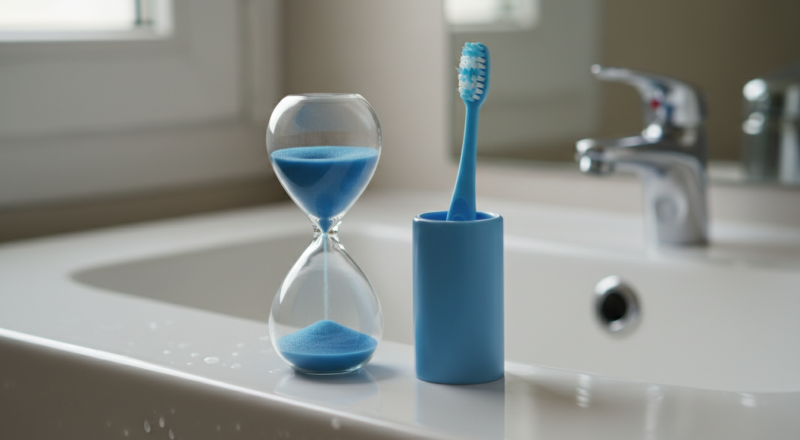
The best toothbrush timer for kids is the one your child will actually watch for the full two minutes, and that depends on age more than on the gadget. Sand timers suit the youngest, light-up timers suit kids who like pressing buttons, and an app or a built-in brush timer suits kids who already use a phone or an electric brush.
The American Dental Association recommends brushing twice a day for two minutes each time. Below you will find four timer formats, what each one costs, and how to match one to your child.
Four toothbrush timer formats compared
A timer does one job: it ends the session at 120 seconds instead of at the child’s patience limit. The formats differ in how they hold attention.
| Timer type | Duration | Power source | Price (source) |
|---|---|---|---|
| Sand timer | 2 minutes | None, gravity | $7.52 for a set of 2 (Walmart listing) |
| Light-up stick-on timer (Turtle Timer) | 2 minutes, each flipper lights for 30 seconds | 2 AAA batteries, not included | $20.00 (ToothbrushTimer.com) |
| App timer (Oral-B Disney Magic Timer) | Two-minute sessions once Training Mode is turned off | Your phone or tablet | Free (Oral-B) |
| Built-in brush timer (Philips Sonicare for Kids) | KidTimer rises to 2 minutes over 90 days | Rechargeable brush | Varies by retailer |
Prices are what each page listed in October 2026 and change often. Durations come from the brand or manufacturer pages.
Video: Mister Kipley Adventures
Which format fits which age
Sand timers have no screen and no batteries, which makes them a fair pick for toddlers and for a bathroom with no outlet. Their weakness is that the sand runs out quietly, so a distracted child may not notice.
A light-up timer gives a visible signal every 30 seconds, so a child can see progress. Apps add stickers and calendars, but they also put a phone in a wet room.
A built-in timer sits in the brush itself, so there is no second object to carry or lose. Philips describes its KidTimer as increasing brushing time slowly over 90 days, so the first weeks are shorter than two minutes by design.
What a timer will not fix
A timer measures time, not technique. If your child still rushes the back teeth or spits out the toothpaste immediately, the clock alone changes little. Our guide on how to get kids to brush longer covers habits that work alongside any timer.
If you are considering the built-in route, read the kids electric toothbrush guide before you buy. And check how much toothpaste kids should use, since a longer brushing session does not call for more paste.
The ADA also suggests playing music your child likes during brushing, which works as a free timer. This article is general information, not dental advice.
Questions readers ask
How long should kids brush their teeth?
The American Dental Association recommends brushing twice a day for two minutes each time.
Is a sand timer or an app better for a toothbrush timer for kids?
Neither is better for every child. A sand timer needs no screen or batteries, while an app such as Oral-B Disney Magic Timer adds stickers and a brushing calendar. Pick the one your child will keep watching.
Do electric toothbrushes for kids have a built-in timer?
Many do. Philips Sonicare for Kids includes a KidTimer that gradually increases brushing time over 90 days toward the dentist-recommended two minutes.