How to Get Kids to Brush Longer Than 10 Seconds
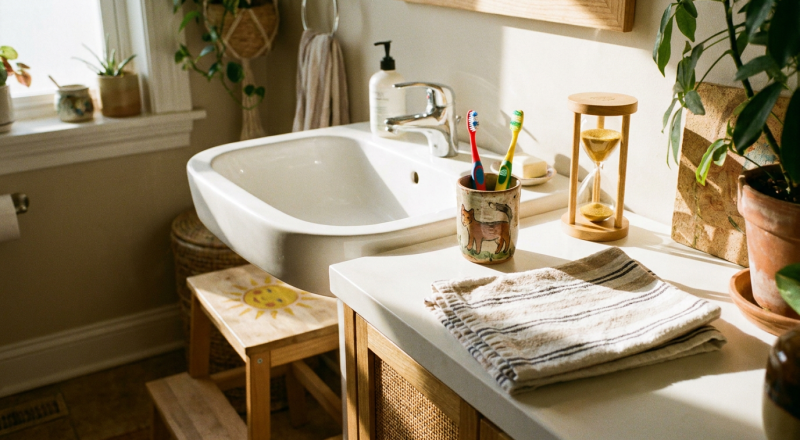
Give the two minutes a shape your kid can actually see or hear. A sand timer, a song, or a brush that buzzes every 30 seconds works because a four-year-old cannot feel time passing, but they can follow a beat.
Nagging does not extend brushing. Structure does.
Why ten seconds feels like enough to them
Young kids brush until the job feels finished, and it feels finished the second the front teeth go smooth. The back molars, where cavities often start, never get touched.
Fine motor control for careful circular brushing usually does not arrive until around age seven or eight. Dental guidance reflects that: supervise, and finish the job yourself until they can do it properly.
Tools that stretch the clock
A two-minute sand timer sits on the sink and does one job. No batteries, no screen, no argument about which song.
Electric brushes with a quadrant pacer buzz every 30 seconds, turning two minutes into four short rounds. Kids handle four little jobs better than one long one.
A phone timer works too, though the phone invites a scroll. Keep the tool boring.
Make the taste worth staying for
Half of the ten-second brush is a flavor problem. Sharp mint stings a small mouth, and heavy foam makes kids want to spit early.
Mild fruit or vanilla flavors buy you real time at the sink. If you are still choosing, a training toothpaste for toddlers keeps the flavor gentle while the swallow reflex is still developing.
Amount matters as much as flavor. A rice-sized smear under age three and a pea after that keeps foam manageable, and the breakdown of how much toothpaste kids should use covers each age group.
Games that hold attention past the front teeth
- Sugar bug hunt: name one specific tooth that has a bug on it, then move to the next.
- Two songs, one rule: top teeth for song one, bottom teeth for song two.
- Mirror duty: your kid brushes your teeth for 30 seconds, then you brush theirs.
- Quadrant card: four squares on a card, one sticker per square, filled in each night.
Rotate the game every week or two. The novelty is doing the work, not the specific game.
When to stop fighting and take over
If your child is under seven, brushing their teeth again yourself is normal and expected. Let them go first for practice, then spend 20 focused seconds on the molars and the gumline.
Agree on one kids toothpaste everybody likes so the timer becomes the only thing left to negotiate.
If brushing sets off real distress rather than boredom, raise it at the next dental visit. A sore gum, genuine sensitivity, or a sensory issue changes the plan completely.